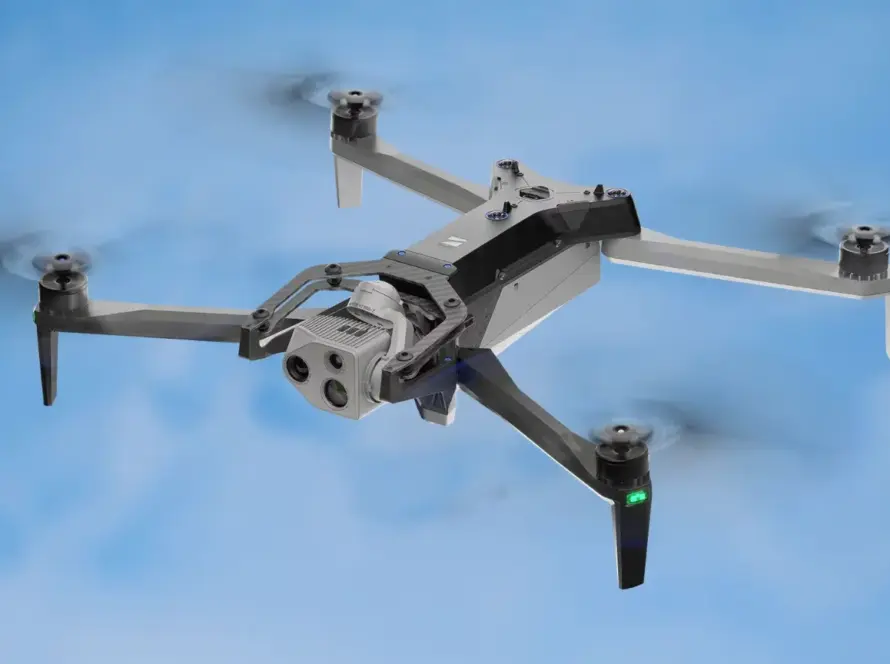
As utility-scale solar fields expand globally, maintaining hundreds of thousands of photovoltaic (PV) panels is a major operational challenge. A single faulty solar cell or failing inverter can compromise the energy yield of an entire array. Drone-based 640×512 radiometric thermal inspections have emerged as the industry standard for solar field maintenance, providing the thermal resolution and temperature accuracy needed to detect failures from the air.
Quick Summary & Direct Answer
640×512 radiometric thermal inspections use advanced drone thermography sensors to capture precise temperature data for every pixel. By flying automated patterns over solar panels, the drone identifies thermal anomalies (hot spots, diode failures, and string dropouts) and geo-tags their exact locations, allowing maintenance crews to perform targeted repairs.
The Critical Need for 640×512 Thermal Resolution
Thermal sensors with lower resolutions, such as 160×120 or 320×240, struggle to capture individual cell details when flying at efficient survey altitudes. A 640×512 radiometric sensor provides four times the pixel density, ensuring that even small hairline cracks and micro-hotspots are visible from 50 meters above. Furthermore, ‘radiometric’ capabilities mean the camera doesn’t just display color differences, it records the absolute temperature value of every pixel. This allows engineering teams to measure the exact temperature difference (Delta T) between a functioning cell and a faulty one, indicating defect severity.
Common PV Defects Detected by Thermal Drone Flights
During a typical solar field thermal scan, drones detect several common defects. Cell-level hotspots occur when dust, shadow, or physical cracks block current flow, causing the cell to heat up dramatically and risk catching fire. Diode failures appear as rectangular hot blocks across a panel. String dropouts, which occur when an entire row of panels loses connection to the inverter, show up as uniform cold blocks. Detecting these issues quickly allows solar plant operators to maintain maximum power output and claim manufacturer warranties with clear visual evidence.
Photovoltaic (PV) Defect Analysis via Radiometric Thermal Drones
| Thermal Signature | Likely Defect / Failure Type | Operational Impact on Array |
|---|---|---|
| Isolated Hot Spot (high temp pixel) | Micro-crack, debris, bird droppings, or shadow | Local cell damage, reduced efficiency of panel |
| Rectangular Hot Blocks (⅓ of panel hot) | Bypass diode failure or internal short circuit | Loss of 33% of panel’s power generation capacity |
| Uniform Cold String (entire row cold) | Inverter disconnect or severed wiring cabling | Loss of entire string’s energy contribution to grid |
Maximizing Solar Energy Production in Jordan’s Desert Parks
Jordan is home to some of the largest solar power plants in the Middle East, located in Ma’an, Quweira, and Mafraq. Dust accumulation and high desert temperatures make regular inspections critical to avoid efficiency losses. Loyalty Drones delivers professional 640×512 radiometric thermal inspections for solar field developers throughout Jordan. Working in compliance with CARC guidelines, we provide detailed thermographic reports that identify exact panel coordinates, aiding maintenance crews in maintaining high solar performance, preventing degradation, and maximizing return on investment.
Partner with Loyalty Drones
Ensure your solar field operates at peak efficiency. Contact Loyalty Drones to schedule a radiometric thermal inspection.