The DJI Avata 3 brings a meaningful sensor and FPV-experience upgrade over the Avata 2 — better low-light, longer battery, improved goggles integration, and refined cinewhoop flying characteristics — but the Avata 2 remains a strong buy if you find one discounted. The honest answer on upgrading depends on whether you’re shooting paid FPV work (upgrade) or flying for fun (the Avata 2 is fine).
Where the Avata 3 clearly improves
Sensor low-light performance, FPV goggles latency, audio recording quality (now built-in mic with usable quality), and battery time (15–20% longer). The handling tweaks make tight indoor and cinematic FPV easier for less-experienced pilots.
Where the Avata 2 still holds up
The Avata 2 still flies the same routes, captures cinewhoop-style indoor/proximity FPV well, and remains supported with firmware updates. For non-commercial pilots, the difference is marginal in most light.
Goggles integration — what changed
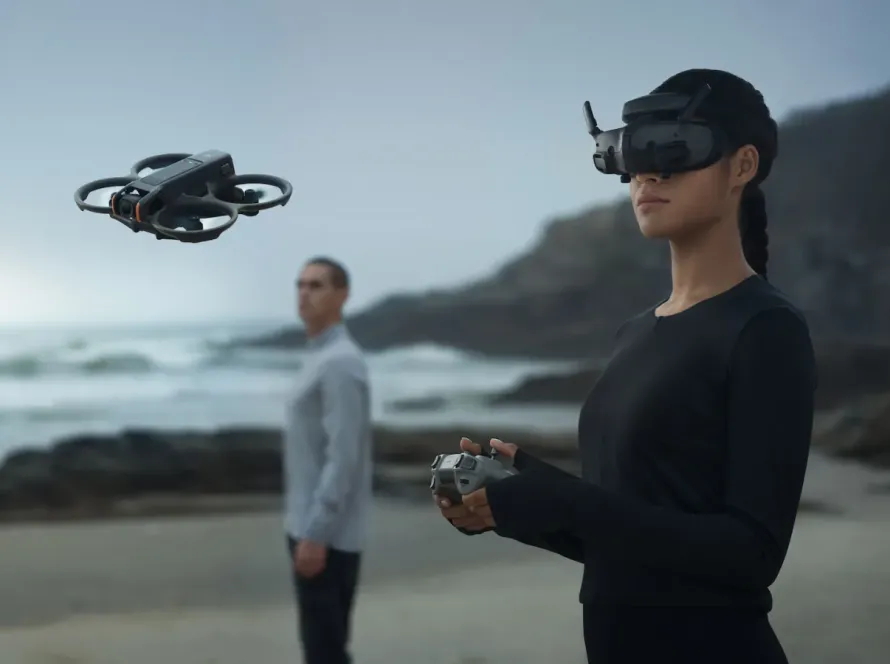
The Avata 3 launches with DJI Goggles 3 as the recommended pair; lower latency and a sharper display make a real difference for fast flying. If you already own Goggles 2 with the Avata 2, upgrading goggles plus drone is expensive — consider buying Goggles 3 first if budget is tight.
Cinewhoop-style flying for content
Both Avatas excel at the cinewhoop look — indoor reveals, tight proximity flying, follow shots through doorways. The Avata 3’s sensor handles indoor low-light better, which is the most common pain point on this style of work.
Safety: prop guards and crash tolerance
Both Avatas use prop guards as standard and survive minor crashes well. Replacement parts are inexpensive. The Avata 3’s slightly tougher airframe handles harder hits, but neither is built for high-speed open-field FPV the same way a freestyle quad is.
Pricing reality and who should upgrade
If you shoot FPV professionally: upgrade. If you fly for fun and already have the Avata 2 working well: skip the 3 and wait. New buyers: pay the extra for the 3 — the gap is worth it.
Avata 2 vs Avata 3 — spec comparison
| Spec | Avata 2 | Avata 3 |
|---|---|---|
| Sensor | 1/1.3″ | Larger, improved low-light |
| Flight time | ~23 min | ~27 min |
| Goggles | Goggles 2 / 3 | Goggles 3 (recommended) |
| Audio | External only | Built-in mic |
| Wind tolerance | 10 m/s | ~11 m/s |
| Prop guards | Yes | Yes, tougher airframe |
Frequently Asked Questions
Is the Avata 3 worth upgrading from the Avata 2?
For professional FPV creators yes; for hobby pilots already comfortable on the Avata 2, the gap is smaller and the Avata 2 remains capable.
Do Goggles 2 work with the Avata 3?
Yes — backward compatibility is maintained, but the Avata 3 plus Goggles 3 is the best-paired experience.
Can the Avata 3 fly outdoor freestyle?
Yes, but it’s tuned more for cinewhoop-style cinematic flying than for high-speed acro. Dedicated freestyle pilots usually pick a custom quad.
Is FPV legal in Jordan?
Yes, with CARC permitting like any commercial drone work. Hobby FPV is allowed in unrestricted airspace but watch out for line-of-sight rules.
Does the Avata 3 have GPS return-to-home?
Yes — a GPS module and RTH are available for safety, useful for new pilots transitioning from non-FPV drones.
Need a Drone in Jordan?
Need FPV drone advice for Jordan? Contact Loyalty Drones for advice on buying or for a CARC-permitted shoot. Related reading: DJI Goggles 3 FPV experience. drone laws in Jordan.