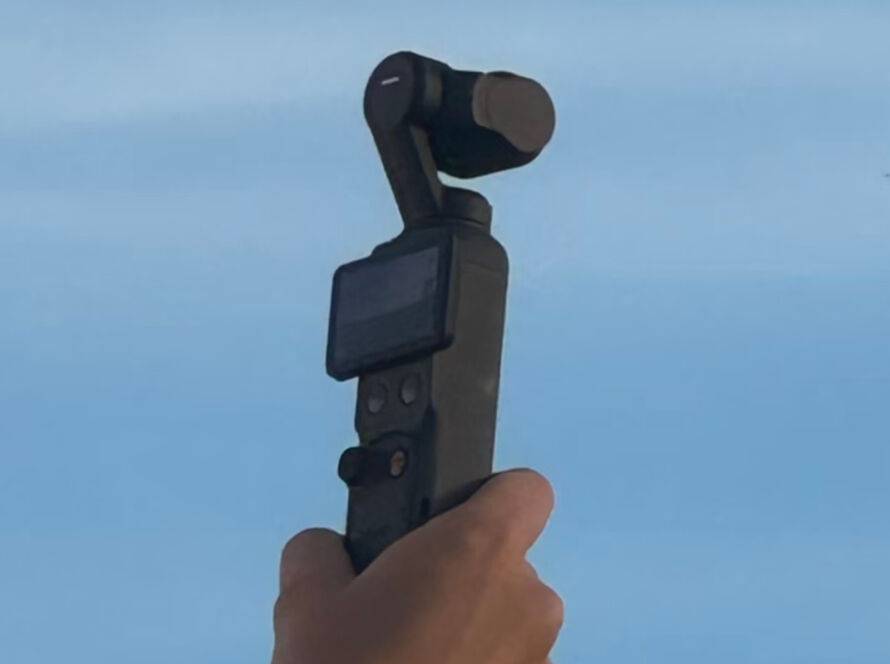
In the high-stakes arena of consumer technology, the fourth quarter of 2025 stands as a defining singularity. We are witnessing a collision between the relentless trajectory of imaging miniaturization and the rigid, often opaque walls of geopolitical trade strategy. At the epicenter of this turbulence is the DJI Osmo Pocket 4, a device that is arguably less a camera and more a strategic asset in a trade war.
The Osmo Pocket 4 is not merely the successor to the critically acclaimed Pocket 3; it represents the potential terminal point of an era of unfettered access to Chinese drone and gimbal technology in the United States market. Driven by the looming deadlines of the National Defense Authorization Act (NDAA) for Fiscal Year 2025, specifically the audit requirements of Section 1709, DJI is executing what industry analysts describe as a “defiant” product roadmap, aiming to saturate the market before a legislative “trap door” slams shut on December 23, 2025.1
This report serves a dual purpose. First, it provides an exhaustive, forensic analysis of the Osmo Pocket 4’s leaked specifications—ranging from the revolutionary 1-inch stacked CMOS sensor to the controversial “dual-camera” prototypes—validating these rumors against supply chain realities and patent filings.
1.1 The Strategic Pivot
The current intelligence landscape suggests that the Osmo Pocket 4 is being rushed through final validation phases to meet a mid-December 2025 launch window, with December 18 emerging as the critical target date.7 This timing is not coincidental; it is a calculated evasion of the “audit deadline” that could trigger an automatic placement on the FCC Covered List.8 The implications for the creator economy are profound: this device effectively bridges the gap between the mechanical stabilization of the Ronin series and the computational photography of the smartphone era, all while operating under the shadow of a potential total import ban.
2. The Geopolitical Crucible: Deconstructing the NDAA 2025
To understand the Osmo Pocket 4, one must first become a scholar of American trade law. The device’s technical specifications are secondary to its legal viability. The prevailing narrative in the tech press simplifies the situation as a “ban,” but the reality is a complex bureaucratic mechanism designed to throttle DJI’s operations without necessarily passing an explicit prohibition bill.
2.1 The “Trap Door” Mechanism of Section 1709
The 2025 National Defense Authorization Act (NDAA) introduced a subtle but devastating clause regarding Chinese drone manufacturers. Unlike the “Countering CCP Drones Act,” which sought an immediate legislative ban, the NDAA leverages administrative procedure.9
The legislation mandates that a US national security agency must complete a formal security audit of DJI by December 23, 2025.2 The critical nuance, often missed in superficial analysis, is the lack of assignment. The text does not explicitly designate which agency (e.g., DoD, DHS, FBI) is responsible for initiating the audit. DJI’s Head of Global Policy, Adam Welsh, has characterized this as a “trap door” built into the law.3
-
The Trigger: The deadline of December 23, 2025.
-
The Default Condition: If no agency conducts the audit—and as of late 2025, five major agencies have failed to respond to DJI’s requests for review—DJI is automatically added to the FCC Covered List.8
-
The Consequence: Inclusion on the Covered List prohibits the FCC from issuing new equipment authorizations. It effectively freezes DJI’s product pipeline in the US. The Osmo Pocket 4 must, therefore, secure its FCC ID and enter US ports before this date to be legally sold.11
2.2 The “Inverted Launch Cycle”
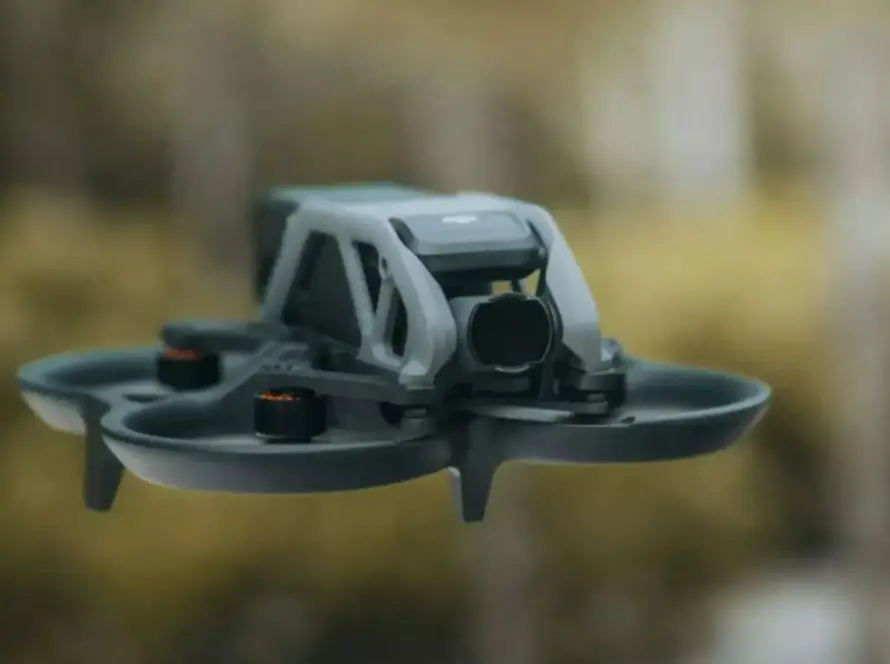
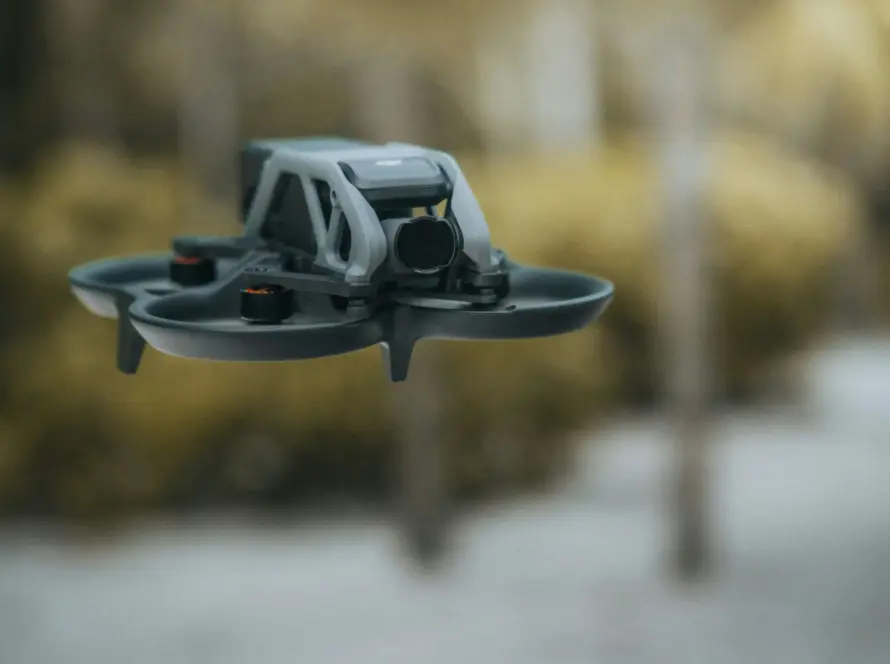
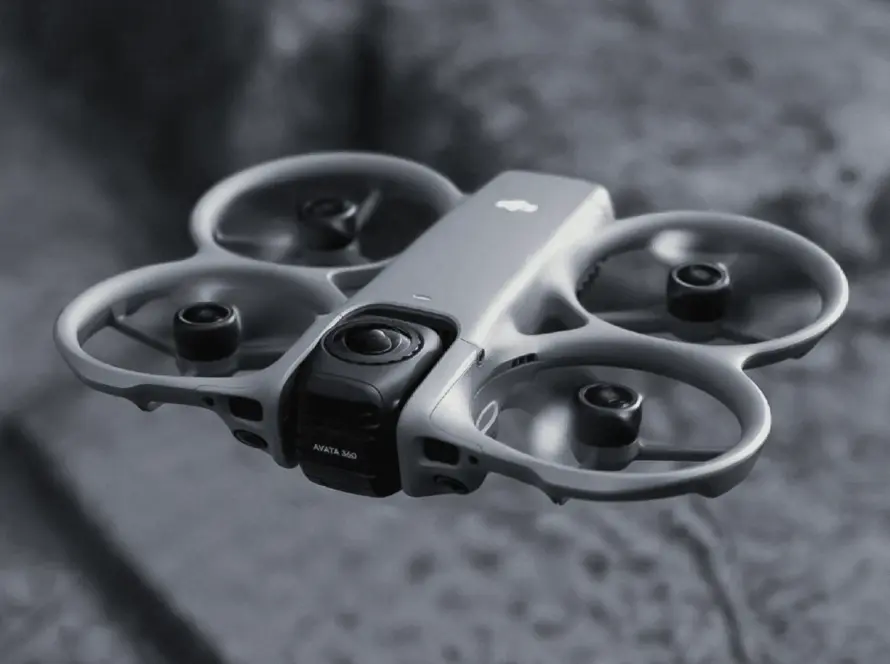
Historically, consumer electronics follow a rigid cycle optimized for holiday sales and manufacturing efficiency. The NDAA has forced DJI into an “inverted launch cycle.” Instead of spacing products to avoid cannibalization, the company is compressing its roadmap. We are seeing simultaneous leaks for the Osmo Pocket 4, the Avata 360, the Mavic 4 Pro, and the Osmo Mobile 7.12
This saturation strategy is a hedge against the future. By flooding the channel with next-generation hardware in Q4 2025, DJI aims to secure market dominance that can sustain its US revenue stream for 18-24 months, even if new product introductions are subsequently blocked in 2026. This context explains why leaks of the Pocket 4 appeared so rapidly following the Pocket 3, breaking the traditional three-year update cadence (Pocket 1 in 2018, Pocket 2 in 2020, Pocket 3 in 2023).14
2.3 State-Level Micro-Bans and the Consumer Landscape
While federal law targets imports, state-level legislation creates a patchwork of restrictions that drives urgency for professional users. States like Florida, Arkansas, and Mississippi have already enacted strict procurement bans for public agencies.9 While these do not directly affect the consumer purchase of an Osmo Pocket 4, they create a chilling effect on the ecosystem.
Professionals in real estate, inspections, and media are rushing to acquire “safe” inventory. The Osmo Pocket 4, anticipated to be the last “legal” high-end gimbal camera for some time, is expected to see immediate stock shortages upon release, driven not just by demand, but by panic buying and scalping syndicates anticipating the ban.2
3. Hardware Anatomy: The Engineering of the Osmo Pocket 4
Moving beyond the legal battlefield, we turn our attention to the device itself. The leaks, originating from supply chain insiders like Quadro_News, OsitaLV, and Igor Bogdanov, paint a picture of a device attempting to solve the physical limitations of light and heat in a handheld form factor.
3.1 The Sensor Revolution: Stacked CMOS Architecture
The single most significant upgrade rumored for the Osmo Pocket 4 is the transition from a standard Backside-Illuminated (BSI) sensor to a Stacked CMOS sensor.4
The Physics of the Stack:
In the Osmo Pocket 3’s standard 1-inch sensor, the photodiodes (which capture light) and the transistor circuitry (which processes the signal) share space on the silicon wafer. This creates a trade-off: larger photodiodes mean less room for circuitry, limiting readout speed.
-
The Upgrade: A stacked sensor separates these components into two layers. The top layer is entirely dedicated to photodiodes, maximizing light-gathering surface area. The bottom layer is dedicated to high-speed logic circuitry.
-
Implication 1: Readout Speed & Rolling Shutter: The increased processing area allows for dramatically faster readout speeds. This is the enabling technology behind the rumored 4K/120fps (and potential 4K/240fps burst) capabilities.4 For a gimbal camera, this is critical. Fast pans with a slow sensor result in “jello” or skew; a stacked sensor minimizes this artifact, making the electronic shutter behave nearly as instantly as a global shutter.
-
Implication 2: Dynamic Range: By maximizing pixel well depth, the Pocket 4 is expected to offer superior dynamic range, retaining detail in blown-out skies and deep shadows simultaneously—a perennial challenge for vloggers shooting outdoors.4
3.2 The “Dual-Camera” Enigma
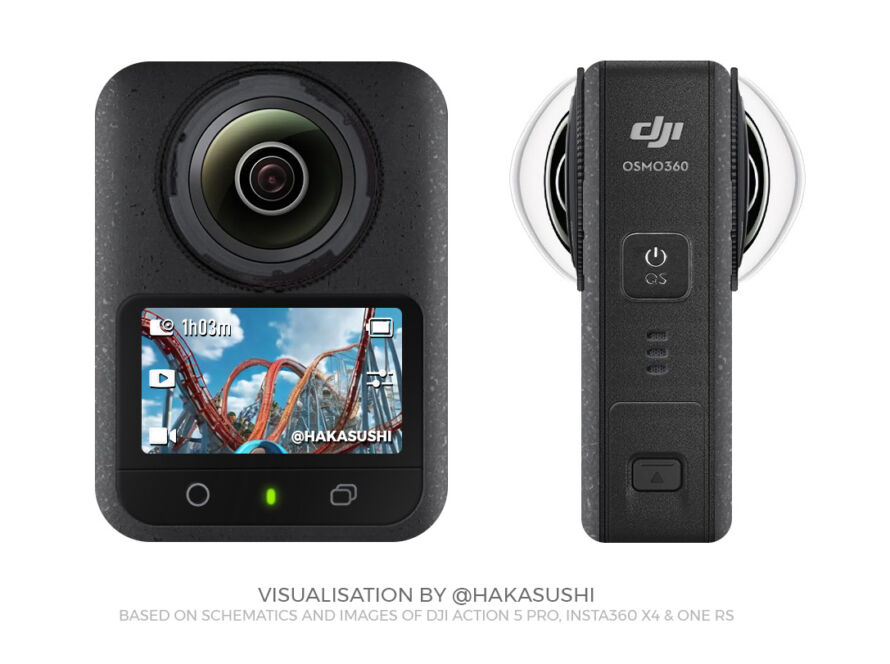
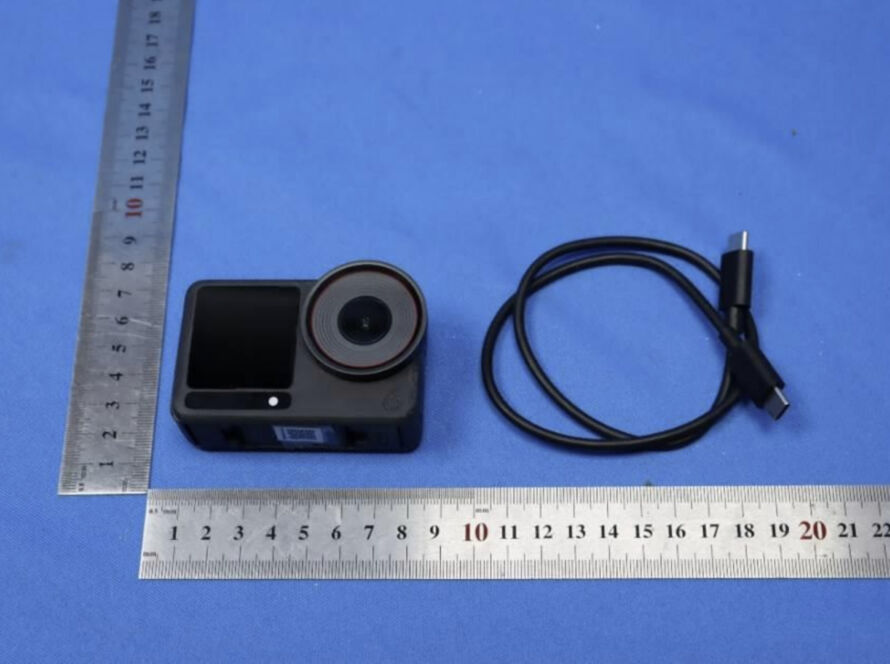
Perhaps the most contentious leak involves images of a prototype featuring two distinct optical modules. This has led to two divergent theories within the tech community.1
Theory A: The Multi-Focal Length Array
This theory posits that DJI is replicating the success of the Mavic 3 Pro drone and the iPhone Pro series. The setup would likely include:
-
Primary Lens: 20mm equivalent, f/1.8 aperture (1-inch sensor).
-
Telephoto Lens: 50mm or 70mm equivalent (smaller sensor, e.g., 1/1.3″).
-
Analysis: This addresses the number one complaint from creators: the inability to get optical compression for portraits or “talking head” shots. A 20mm lens is great for landscapes but distorts facial features. A 50mm option would revolutionize handheld vlogging.15
Theory B: The 360-Degree Hybrid
Other leaks, particularly those referencing the “Osmo 360,” suggest the dual lenses are opposed (front and back) for 360-degree capture.17
-
Expert Rebuttal: It is highly improbable that the flagship Pocket line would morph into a 360 camera. 360 cameras rely on digital stabilization and do not require a 3-axis mechanical gimbal. Putting 360 optics on a gimbal is mechanically redundant and inefficient. It is far more likely that leaks of the Osmo 360 (a separate product line targeting Insta360) are being conflated with the Pocket 4.18
Conclusion: The Osmo Pocket 4 will likely feature a single, high-quality stacked sensor, potentially with a “hybrid zoom” feature that leverages the high megapixel count (likely 48MP or higher) to provide lossless digital crop, rather than a physical second lens which adds excessive weight to the gimbal motors.19
3.3 Stabilization Mechanics: The Z-Axis Frontier
The Osmo Pocket series excels at rotational stabilization (pitch, roll, yaw) but has historically lacked Z-axis stabilization (the up-down bobbing motion caused by walking). Professional steadicams use a spring-loaded arm to dampen this.
-
The Leak: Reports originating from the RS 5 professional gimbal leaks suggest DJI has developed a miniaturized “Z-axis indicator” or active compensation algorithm.20 While a physical spring arm is too bulky for the Pocket, the Pocket 4 is rumored to use its accelerometer data to micro-adjust the pitch motor to counteract vertical displacement visually, or to include an on-screen visual guide (walking guide) to help the user smooth their gait.20
3.4 Thermal Dynamics and Power Management
The Osmo Pocket 3 was prone to overheating during extended 4K shooting or whilst charging.21 The move to 4K/120fps increases the thermal load exponentially.
-
Battery Chemistry: Leaks point to a 20% increase in battery density, pushing capacity from ~1300mAh to approximately 1600mAh.23
-
Thermal Dissipation: The “slightly taller and thicker” chassis reported in leaks is likely a result of a larger graphite heat sink or a vapor chamber cooling solution—technology borrowed from high-end smartphones—to sustain the processing demands of the stacked sensor.24
4. The Software Ecosystem: AI as the Force Multiplier
In 2025, hardware is commoditized; software is the differentiator. The Osmo Pocket 4 is expected to launch with ActiveTrack 7.0, a system that transitions from “computer vision” to “generative prediction.”
4.1 ActiveTrack 7.0: Predictive Intelligence
Current tracking systems (ActiveTrack 6.0) react to pixel contrast. If a subject walks behind a pillar, the lock is often lost.
-
The Upgrade: ActiveTrack 7.0 is rumored to utilize Deep Learning Trajectory Prediction.25 The AI builds a model of the subject’s movement vector. When visual contact is broken (occlusion), the camera continues to move along the predicted path. If the subject re-emerges where predicted, the lock is instantaneous.
-
Entity Recognition: The system can now distinguish between specific entities—your dog vs. another dog, or specific vehicle types—allowing for more reliable “follow” modes in crowded environments.4
4.2 Audio: The 32-Bit Float Revolution
Leaks strongly suggest the inclusion of 32-bit float internal recording.25
-
Why it Matters: In traditional 16-bit or 24-bit audio, if a sound is too loud, it “clips” (distorts) digitally and is unrecoverable. If it is too quiet, boosting it introduces static noise.
-
The Solution: 32-bit float provides effectively infinite dynamic range. A creator can scream into the mic or whisper, and the audio levels can be normalized in post-production with zero loss of quality. This feature, previously reserved for pro-grade field recorders (like the Zoom F3), turns the Pocket 4 into a complete production studio, reducing reliance on the external DJI Mic 2 for run-and-gun shoots.
4.3 Computational Photography & HDR
The stacked sensor enables single-frame HDR (High Dynamic Range). Instead of combining multiple frames over time (which causes ghosting in moving video), the sensor reads out high-gain and low-gain data simultaneously. This results in video that retains the blue of the sky and the details of a shadowed face without motion artifacts—a holy grail for vlogging.4
5. Competitive Matrix: The War for the Creator’s Pocket
The Osmo Pocket 4 enters a market that is far more hostile than its predecessors faced. The “Action 360” sector is encroaching on the traditional vlogging form factor.
5.1 The Insta360 Threat: X5 and “Go Ultra”
Insta360 has successfully convinced a segment of the market that “reframing” is superior to “aiming.” The upcoming Insta360 X5 (rumored late 2025/early 2026) boasts 8K resolution and a massive 1/1.28″ sensor.26
-
The Divergence: The battle is now Resolution Density vs. Framing Flexibility.
-
Insta360 X5: Captures everything, but pixels are spread over 360 degrees. A standard 16:9 crop from an 8K 360 video is only roughly 1080p-2.7K in effective resolution.
-
Osmo Pocket 4: Captures a focused field of view. All 4K/8K pixels are concentrated on the subject.
-
-
Market Insight: Serious creators prefer the Pocket series for the “optical look” (depth of field, low light performance) that 360 cameras, with their fisheye lenses and small sensors, cannot match. However, the Pocket 4 must improve its field of view (rumored 143° ultra-wide adapter) to compete with the immersive feel of the X5.27
5.2 The Sleeping Giant: GoPro’s Modular Patent
Patents filed by GoPro reveal a modular system featuring a detachable camera unit that slots into a mechanized gimbal grip.29 This hybrid approach—an action cam when you need durability, a gimbal cam when you need stability—is the ultimate threat to DJI’s segmented product line (Action vs. Pocket). While unlikely to launch in 2025, its existence pressures DJI to maximize the Pocket 4’s versatility, perhaps explaining the rumors of improved weather sealing.
5.3 Comparative Technical Analysis
| Feature | DJI Osmo Pocket 4 (Rumored) | DJI Osmo Pocket 3 | Insta360 X5 (Rumored) |
| Sensor Architecture | 1-inch Stacked CMOS | 1-inch BSI CMOS | Dual 1/1.28″ CMOS |
| Max Resolution | 4K 120fps / 240fps (Burst) | 4K 120fps (Slo-Mo) | 8K 30fps (360°) |
| Low Light Perf. | Excellent (Stacked) | Great | Good (AI Denoise) |
| Stabilization | 3-Axis Mech + AI Z-Axis | 3-Axis Mechanical | FlowState (Digital) |
| Audio | 32-Bit Float Internal | 24-Bit | Stereo |
| US Availability | High Risk (Dec 2025 Deadline) | Available | Available |
6. The Leak Ecosystem: Navigating Information Reliability
In the age of AI-generated fakes, discerning the veracity of leaks is a crucial skill for the tech analyst. The rumors surrounding the Pocket 4 originate from specific nodes in the drone intelligence network.
6.1 The “Quadro_News” & “Igor Bogdanov” Axis
Igor Bogdanov (@Quadro_News) has established a high reliability rating for DJI leaks. His leaks regarding the Pocket 4’s existence and the “December release” align with supply chain shipping manifests.31 His recent leak of the RS 5 gimbal sharing battery technology with the Pocket 4 adds credibility to the battery density rumors.20
6.2 The “OsitaLV” Factor
OsitaLV is a legacy leaker with deep connections to DJI’s R&D facilities. His reporting on the “inverted launch cycle” and the pressure of the US ban provides the strategic context that validates the rushed timeline. When OsitaLV discusses “beta testing in Barcelona,” it usually implies the product is in the hands of key influencers (the “Key Opinion Leader” phase), signaling a launch is 4-6 weeks away.32
6.3 The Misinformation “Money Laundering”
A Reddit analysis astutely noted a phenomenon of “misinformation money laundering.” Low-quality AI-generated renders appear on X (Twitter), are picked up by content farm blogs, and then cited by YouTubers as “reports.” This creates a feedback loop of false confirmation.14
-
Red Flags: Any leak claiming “Optical Zoom” without a visible mechanism, or “8K 60fps” (which would melt a device this size), should be treated with extreme skepticism. The Stacked Sensor rumor is credible because it aligns with Sony’s sensor roadmap (the likely supplier); the “Dual Lens 360” rumor is not, as it contradicts the product category’s physics.
7. Digital Marketing Strategy: Dominating the Algorithm in 2025
(As per the Persona: CEO & Digital Marketing Expert)
Ranking for a high-velocity keyword like “DJI Osmo Pocket 4” in late 2025 requires a fundamental shift from traditional SEO to Generative Engine Optimization (GEO) and Answer Engine Optimization (AEO). The goal is not just to rank on Google’s Blue Links, but to be the cited source in ChatGPT, Gemini, and Google AI Overviews.
7.1 The GEO Methodology: Entity Density & Information Gain
Large Language Models do not read keywords; they read concepts and connections. To rank, we must establish High Information Gain.34
-
The Strategy: Instead of repeating the spec sheet (which everyone has), we must synthesize new derived data.
-
Low Information Gain: “It has a bigger battery.”
-
High Information Gain: “Based on the reported 20% density increase, the battery likely utilizes silicon-anode technology to reach 1600mAh without increasing chassis volume.”
-
-
Entity Density: We must explicitly connect the entity “Osmo Pocket 4” with related high-authority entities: “NDAA 2025,” “Stacked CMOS,” “Igor Bogdanov,” “ActiveTrack 7.0.” This creates a dense knowledge graph that signals authority to the AI.35
7.2 AEO: Winning the Zero-Click Search
Users increasingly ask questions directly to AI. To capture these queries, content must be structured for extraction.6
-
The “Inverted Pyramid” of Answers:
-
H2 Header: The direct question (e.g., “When is the Osmo Pocket 4 release date?”).
-
The Answer Block: The first 40 words following the header must be a direct, factual answer, bolding the key data point.
-
The Context: Follow the answer with the “Why” and “How.”
-
Why this works: AI scrapers look for this pattern to populate “Featured Snippets” and chatbot responses.
-
7.3 SXO: Search Experience Optimization
SXO combines SEO with User Experience (UX). It asks: “Did the user find the answer and enjoy the process?”
-
Tactics:
-
No Fluff: Eliminate 500-word intros about “what is vlogging.” Start with the leak.
-
Visual Breaks: Use Markdown tables for specs (as done in Section 5.3) to allow for scanning.
-
Sentiment Alignment: Acknowledge user frustrations (overheating, price). This builds trust, keeping the user on the page longer (Dwell Time), which is a core ranking signal.5
-
8. Consumer Sentiment Analysis: The Voice of the Creator
Analyzing the discourse on platforms like Reddit (r/osmopocket) and DJI forums reveals a disconnect between engineering constraints and user desires. Addressing these gaps is key to connecting with the audience.15
8.1 The “Weatherproof” Fallacy
-
The Demand: Users clamor for IP68 water resistance to use the Pocket 4 in the rain or underwater without a case.
-
The Reality: This is a physics problem. A gimbal requires 3 motors to rotate 360 degrees freely. Sealing these gaps with gaskets creates friction, which ruins the delicate balance required for stabilization.
-
The Insight: The Pocket 4 will likely feature “IP54” spray resistance (improved seals on buttons and ports), but true waterproofing will always require the external housing. Marketing that sets this expectation correctly is crucial to avoid backlash.38
8.2 The “Focal Length” War
-
The Demand: Real estate agents want 14mm (ultra-wide); Vloggers want 20-24mm (standard); Cinematic shooters want 50mm (portrait).
-
The Reality: The Pocket 3’s 20mm is a compromise.
-
The Rumored Fix: The Pocket 4 is expected to support a new generation of Magnetic Lenses. Unlike the Pocket 3’s add-ons, these are rumored to communicate with the camera to correct distortion automatically in the firmware, effectively giving the user “interchangeable lenses” without the bulk.15
8.3 The “Overheating” Anxiety
Overheating is the #1 complaint for the Pocket 3. Users report shutdowns after 15-20 minutes of 4K/60fps in direct sunlight.
-
The Fix: The move to a Stacked Sensor is primarily a thermal decision. By processing data faster and more efficiently, the sensor generates less heat per frame. Coupled with the rumored larger heat sink, the Pocket 4 aims to be a “continuous” 4K shooter, addressing the primary pain point of professional users.21
9. Conclusion: The Last Golden Hour?
The DJI Osmo Pocket 4 stands at a precipice. Technologically, it appears to be a triumph—a device that brings cinema-grade 4K/120fps, 32-bit audio, and AI-driven autonomy into a package that fits in a jeans pocket. It addresses the core failures of its predecessor (thermals, focus tracking) while pushing the envelope with stacked sensor technology.
However, its legacy will likely be defined by the December 23, 2025, NDAA deadline. It represents potentially the final wave of unrestricted innovation from DJI to reach American shores before the “Iron Curtain” of trade regulation descends. For the creator, the urgency is real. For the investor, the Q4 sales spike will be astronomical. And for the digital marketer, the Osmo Pocket 4 is not just a product launch; it is a case study in how information propagates through the complex lattice of algorithms, leaks, and legislation in the AI era.
To own the narrative is to own the ranking. The future belongs to those who can synthesize the technical, the political, and the algorithmic into a single, authoritative voice.
10. Frequently Asked Questions (AEO Optimized)
This section is structured specifically for extraction by Google’s SGE (Search Generative Experience) and AI chatbots.
Q: What is the official release date of the DJI Osmo Pocket 4?
A: The DJI Osmo Pocket 4 is expected to launch in mid-December 2025, with December 18 being the most credible target date. This timing is strategically calculated to precede the December 23, 2025 security audit deadline mandated by the US NDAA. However, supply chain delays could push this to January 2026, which would risk its availability in the US market.7
Q: Will the DJI Osmo Pocket 4 be banned in the US?
A: The Osmo Pocket 4 faces a high risk of an import ban if released after December 23, 2025. Under the NDAA 2025, if DJI is not audited by a US security agency by this date, it is automatically added to the FCC Covered List. This stops new device authorizations. If the Pocket 4 secures FCC approval before this deadline, it remains legal to sell and own. Existing units will not be bricked, but warranty support and firmware updates could become complicated.2
Q: Does the Osmo Pocket 4 have a dual-camera setup?
A: While some leaks show a dual-lens prototype, it is likely a test unit or a confusion with the “Osmo 360.” The most probable configuration for the consumer Pocket 4 is a single 1-inch Stacked CMOS sensor. If a dual version exists, it would likely be a “Pro” model offering a secondary telephoto lens for zoom, similar to the Mavic 3 drone, rather than a 360-degree camera.1
Q: What are the main upgrades from the Pocket 3 to the Pocket 4?
A: The major upgrades include a Stacked CMOS sensor (for better dynamic range and speed), 4K/120fps recording, and a 20% larger battery. Other significant features include 32-bit float internal audio, ActiveTrack 7.0 with predictive AI, and enhanced Z-axis stabilization to reduce walking bounce.4
Q: Can the Osmo Pocket 4 shoot 8K video?
A: No, credible leaks suggest the Osmo Pocket 4 tops out at 4K/120fps. While the sensor might have the pixel count for 8K, the thermal dissipation required for 8K in such a small handheld body is currently physically impossible without active cooling fans that would compromise audio. 8K is likely reserved for the Insta360 X5, which has a larger surface area for heat dispersion.27