July 2025 will be remembered not merely for a slate of new product announcements, but as a month of profound strategic realignment across the global drone industry. The currents shaping the future of unmanned aerial systems became clearer than ever, revealing an ecosystem driven by the powerful confluence of geopolitical imperatives, maturing market dynamics, and the relentless advance of artificial intelligence. This month’s developments paint a picture of an industry at an inflection point, where the very definition of competitive advantage is being rewritten.
The dominant themes of July were unmistakable. First, the heavy hand of defense policy is now overtly steering the course of commercial innovation, with the U.S. government’s aggressive push for domestically produced drones creating a powerful, protected market that is accelerating development in AI, cybersecurity, and autonomous systems. Second, the market is maturing, forcing major players to make decisive strategic pivots—some are retreating from hyper-competitive consumer segments to seek refuge in higher-margin enterprise verticals, while others are carving out defensible niches based on security and sovereign supply chains. Finally, artificial intelligence has completed its transition from a marketable feature to the fundamental bedrock of drone technology, while fierce, multi-front competitive battles are shaping the next generation of both hardware and software ecosystems. This report provides an exhaustive analysis of these interconnected forces, offering a detailed look at the news, products, and underlying trends defining the drone landscape.
Drone Tech & Industry Pulse
This section covers the macro trends, policy changes, and broad technological breakthroughs that are shaping the entire drone ecosystem. From the halls of the Pentagon to the labs of AI researchers, these developments form the foundation upon which the industry’s future is being built.
The Pentagon’s Pivot: Accelerating US-Made Drone Dominance
A seismic shift in U.S. defense policy is underway, with the Pentagon moving aggressively to foster a domestic drone industrial base. This initiative, driven by a July 10, 2025, memorandum from Secretary of Defense Pete Hegseth and a June 6, 2025, executive order, aims to “unleash U.S. military drone dominance” by systematically eliminating barriers to the purchase and fielding of American-made drone technology. The policy has three clear goals: prioritize the procurement of U.S.-made drones and components, arm combat units with low-cost systems developed by American engineers, and rescind restrictive policies that previously hindered domestic production.
In a direct move to accelerate this strategy, the Defense Innovation Unit (DIU) announced immediate and significant updates to its “Blue UAS” program, which vets and approves drones for government use. Effective immediately, any drone platform that successfully completes the “Green UAS” certification process—a program focused on compliance and cybersecurity—will be automatically added to the Blue UAS Cleared List. This change dramatically streamlines the pathway for U.S. manufacturers to gain access to the lucrative government market. Furthermore, the management of the Blue UAS program and its website is being transitioned to the Defense Contract Management Agency (DCMA) by the end of 2025, signaling a more permanent and integrated role within the defense procurement apparatus.
The ripple effects of this government-led push are already being felt across the industry. It creates a guaranteed, high-demand market for companies that can meet the stringent security and National Defense Authorization Act (NDAA) compliance requirements. This has spurred a flurry of activity among U.S. and allied firms. Safe Pro Group, for instance, announced the successful integration of its AI-powered explosive threat detection models into drone platforms selected for the U.S. Army’s Short Range Reconnaissance (SRR) program. Similarly, ZenaTech is fast-tracking a patent for its Counter-UAS technology for the ZenaDrone 1000, explicitly citing the White House executive order as the catalyst for accelerating its deployment. This protected ecosystem is also fueling the growth of established defense contractors like RTX and emerging aerospace firms like AIRO Group, which are securing major awards and expanding their U.S. operations to meet the surging demand.
This top-down industrial strategy extends beyond simply buying more drones; it’s a deliberate effort to create a protected and accelerated ecosystem for American innovation. The immense investment and clear policy directives provide a powerful incentive for companies to push the boundaries of drone technology. To compete for these defense contracts, firms are rapidly advancing capabilities in areas the DOD has prioritized: AI-driven object detection, navigation in GPS-denied environments, hardened cybersecurity, and advanced sensor fusion. This defense-focused research and development, funded by the government and operating on innovation cycles driven by geopolitical urgency, will not remain confined to the battlefield. The technologies being perfected for military use will inevitably be adapted and commercialized, leading to more robust, secure, and autonomous drones for the construction, agriculture, and logistics sectors. In essence, the Pentagon’s push is set to act as a powerful accelerator for the entire U.S. drone industry, achieving a level of technological advancement far faster than market forces alone would have allowed.
The AI Revolution in the Skies: From Autonomous Swarms to Automated Safety
Artificial intelligence was the undeniable technological throughline of July 2025, cementing its role as the primary driver of innovation across all segments of the drone industry. The market reflects this reality, with projections showing the global autonomous drone market growing at a compound annual growth rate (CAGR) of 21.7% to reach $25.24 billion by 2025. This month, AI moved decisively from being a collection of discrete features to the core foundation of modern drone systems.
This transformation is evident in both military and commercial spheres. Militaries are developing strategies around AI-driven swarm intelligence, where hundreds of inexpensive UAVs can execute synchronized missions using collective intelligence and decentralized control, capable of overwhelming enemy defenses or conducting vast reconnaissance operations with minimal human intervention. In the commercial world, leading software platforms have released major updates centered on AI. DroneDeploy’s July release introduced “Safety AI,” a tool that automatically monitors job sites for safety risks like missing personal protective equipment, and “Progress AI,” which provides instant analysis of work-in-place on construction sites. Skydio’s latest cloud updates enhance its Drone as First Responder (DFR) offerings, using AI to automatically categorize incidents and help coordinate multi-drone responses for emergency services.
Hardware is also being designed with AI at its core. The new Parrot ANAFI UKR, built for defense and public safety, uses embedded AI and advanced optical navigation to fly reliably in GPS-denied environments—a critical capability learned from modern battlefields. Meanwhile, credible leaks surrounding the forthcoming DJI Mini 5 Pro suggest that “heavy AI-powered tracking” will be a central feature, bringing a new level of autonomous cinematography to the sub-250g category.
This trend marks a fundamental shift in what defines a capable drone. Previously, AI was often marketed as a specific, user-facing feature, such as “follow-me” modes or basic obstacle avoidance. The developments in July 2025 demonstrate that AI is now the underlying engine for entire operational workflows. It is no longer just controlling a drone’s flight path; it is interpreting complex sensor data, managing entire fleets of aircraft, ensuring safety compliance automatically, and enabling entirely new operational concepts like DFR and swarm tactics. The competitive advantage in the drone industry is therefore shifting away from raw hardware specifications like flight time or camera resolution. Instead, the real battle is being fought over the power, sophistication, and reliability of the underlying AI engine and the software ecosystem built upon it. Companies are now competing on intelligence, not just mechanics.
The Unseen Battle: Advances in Counter-Drone (CUAS) Technology
As the capabilities and proliferation of drones expand, so too does the technology designed to detect, track, and neutralize them. The field of counter-unmanned aerial systems (CUAS) saw significant developments in July, highlighting its growing importance. DroneShield, a global leader in the CUAS space, took a prominent role in “Project FlyTrap,” a multinational defense exercise led by the U.S. Army V Corps across Germany and Poland. The exercise, which also involved U.K. forces, was designed to test and improve responses to the fast-evolving aerial threats seen on modern battlefields. DroneShield showcased its portfolio of technologies, including the DroneGun Mk4, underscoring the intense focus of NATO allies on hardening their defenses against hostile drones.
This urgency is also creating new dynamics within the drone industry itself. In a notable move, ZenaTech announced it is accelerating the patent filing and deployment of its own C-UAS technology, which will be integrated directly onto its ZenaDrone 1000 platform. The company explicitly stated that this decision was a direct response to the new U.S. executive order on airspace security, indicating a proactive strategy where drone platforms are themselves becoming part of the counter-drone solution.
The proliferation of small, inexpensive, yet highly effective drones in conflicts such as the one in Ukraine has elevated CUAS from a niche concern to a top-tier military priority. This has fueled a booming market for specialized CUAS companies like DroneShield and others. However, the move by ZenaTech reveals an emerging and fascinating trend: the lines between the drone and anti-drone industries are beginning to blur. A drone platform that possesses the inherent capability to also perform a CUAS mission—effectively acting as a “hunter-killer” against other drones—offers significantly more value to military and security clients. This creates a symbiotic feedback loop. As offensive drone capabilities improve, so too must defensive ones, and in some cases, these advancements will now occur within the very same company or even on the same platform. This integration suggests a future where the aerial battlefield is not just populated by drones and anti-drone systems, but by drones that are their own anti-drone systems.
Beyond the Horizon: Policy Shifts Paving the Way for Global Trade and BVLOS
The regulatory landscape, long seen as a brake on the drone industry’s potential, is showing clear signs of maturing into an accelerator. In the United States, key legislative efforts introduced in July 2025 are set to unlock new markets and operational capabilities. The “Leading Exports of Aerial Drones (LEAD) Act of 2025” was introduced in Congress to streamline the complex and often cumbersome export process for American drone manufacturers, aiming to help them compete more effectively on the global stage.
Simultaneously, progress is being made on the domestic front to enable routine Beyond Visual Line of Sight (BVLOS) operations. The “Leading Innovation in Flight Technology (LIFT) Act,” introduced on July 24, 2025, is designed to accelerate the adoption of BVLOS flights, a critical prerequisite for scaling up applications like long-range infrastructure inspection, large-area mapping, and drone delivery services. The industry is also anticipating the finalization of new Part 108 regulations from the Federal Aviation Administration (FAA), which are expected to provide a comprehensive framework for safe BVLOS operations.
While technological advancements in hardware and software are crucial, the primary bottleneck holding back the drone industry’s next wave of exponential growth has been the lack of a clear and permissive regulatory framework. The technology for safe BVLOS flight is largely mature; companies have capable hardware and sophisticated software. The challenge has been navigating a slow, complex, and risk-averse approval process. The introduction of specific, targeted legislation like the LEAD Act and the LIFT Act demonstrates that policymakers are now actively working to dismantle these barriers. These legislative efforts represent the most significant “unlock” for the industry’s future. While a new camera or a longer-lasting battery provides an incremental improvement, federal laws that enable routine BVLOS flights and streamlined international sales open up entire new markets—worth potentially trillions of dollars over the long term—that were previously inaccessible. This is a foundational shift that will pave the way for nationwide pipeline inspections, urban package delivery networks, and a more competitive global position for U.S. drone manufacturers.
Product Updates & New Releases
July 2025 was a landmark month for new hardware and software, with major players making bold moves that will redefine key market segments. From enterprise workhorses to consumer-friendly cameras and tactical military systems, these releases reflect the broader strategic shifts occurring across the industry.
DJI’s Summer Onslaught: Matrice 400 Redefines Enterprise, Osmo 360 Takes on Action Cams
DJI unleashed a formidable summer lineup, launching two significant products that target the highest end of the enterprise market and the heart of the consumer action camera space.
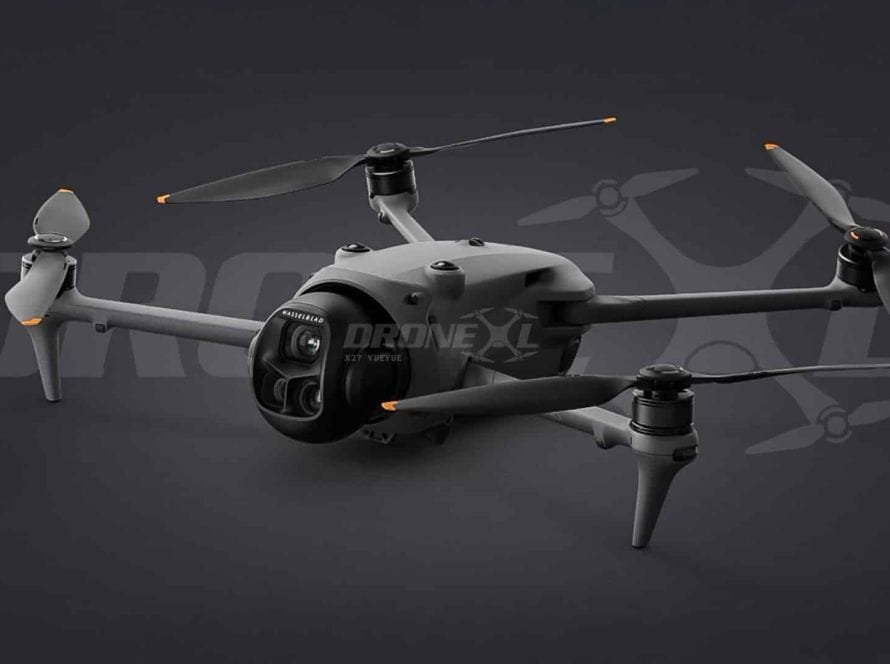
First, the company unveiled the DJI Matrice 400 (M400), a next-generation enterprise platform that will replace the venerable Matrice 300/350 series. This is not an incremental update but a significant generational leap. The M400 boasts a flight time of up to 59 minutes and a maximum payload capacity of 6 kilograms (13.2 lbs)—more than double that of its predecessor. It can support up to seven payloads simultaneously, offering unprecedented mission flexibility. Its safety systems have been massively upgraded with a new obstacle avoidance system that fuses data from a rotating LiDAR unit and millimeter wave radar, enabling it to detect objects as thin as power lines from a distance. The M400’s new O4 Enterprise transmission system extends its operational range to an astonishing 25 miles (40 km), positioning it for complex, long-range BVLOS missions in construction, public safety, large-scale mapping, and critical infrastructure inspection.
On the consumer front, DJI officially entered the 360-degree action camera market with the launch of the DJI Osmo 360 on July 31st. Following months of speculation, the “All In One” camera aims to directly challenge established players like Insta360. Leaks and official teasers point to a powerful device featuring 8K video at 30fps, 10-bit D-Log M color for professional grading, and a 1-inch equivalent CMOS sensor for superior low-light performance. The Osmo 360 also features direct wireless connectivity with DJI Mic transmitters for high-quality audio, waterproofing without a case, and a long battery life that reportedly outperforms competitors in thermal management. With an expected price point around $500–$550, the Osmo 360 is poised to disrupt the action camera market by leveraging DJI’s renowned imaging science and ecosystem integration.
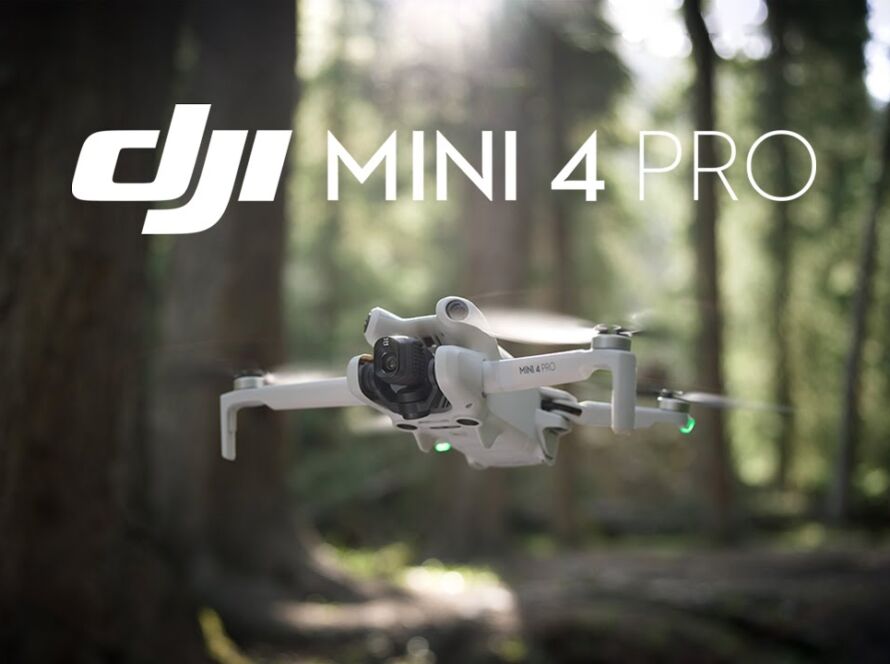
In a smaller but significant software update, the popular enterprise platform DroneDeploy added beta flight support for the DJI Mini 4 Pro, making professional mapping and inspection workflows more accessible to users of the lightweight, sub-250g drone.
| Specification | DJI Matrice 400 | DJI Matrice 350 RTK |
| Max Flight Time | 59 min | 55 min |
| Max Horizontal Speed | 56 mph (25 m/s) | 51 mph (23 m/s) |
| Max Payload Weight | 6 kg (13.2 lbs) | 2.7 kg (5.9 lbs) |
| Max Simultaneous Payloads | 7 | 3 |
| Obstacle Sensing System | Rotating LiDAR, mmWave Radar, Full-Color Low-Light Vision | 6-Directional Vision & Infrared Sensing |
| Video Transmission System | DJI O4 Enterprise Enhanced | DJI O3 Enterprise |
| Max Transmission Range (FCC) | 25 miles (40 km) | 12.4 miles (20 km) |
| Key Payload Compatibility | Zenmuse H30/H30T, L2, P1 | Zenmuse H20/H20T, L1, P1 |
| Key AI Features | Smart AI Detection, AR Projection, Real-Time Terrain Follow | AI Spot-Check, PinPoint |
Autel’s Enterprise Pivot: Sunsetting Consumer Lines for a Commercial Future
In a move that sent clear signals about the state of the drone market, Autel Robotics officially announced it is discontinuing its popular consumer-focused EVO Nano and EVO Lite series drones. The company ceased production and sales on July 18, 2025, and will terminate all service and support for these models in July 2030. The EVO Nano and Lite series, first released in 2021, were widely recognized as strong competitors to DJI’s consumer offerings and were popular among photographers and drone enthusiasts.
In its official announcement, Autel stated the decision was a strategic one, allowing the company to “transform into enterprise drones” and focus its resources on improving product stability and competitiveness in the demanding commercial and public safety sectors. The company is now positioning its more robust EVO II V3 and EVO Max series platforms as the core of its future business, targeting professional users in inspection, mapping, and emergency services.
A company does not abandon a popular and well-regarded product line unless the financial and strategic calculus has fundamentally changed. While Autel was a significant challenger in the prosumer space, DJI’s massive scale, aggressive pricing strategies, and rapid innovation cycles create an incredibly challenging environment for competitors to maintain both market share and profitability. The enterprise market, by contrast, offers higher profit margins, more stable revenue through fleet sales and service contracts, and customers who are less sensitive to price and more focused on reliability and specialized capabilities. Autel’s public pivot is therefore a major barometer for the drone industry, signaling that the high-end consumer market is maturing and likely reaching a point of saturation. This move can be seen as a strategic retreat from a battlefield where DJI’s dominance is overwhelming, and a repositioning toward the more defensible and lucrative enterprise segment.
Parrot’s Tactical Return: The ANAFI UKR Enters the Fray
French manufacturer Parrot made a powerful return to the spotlight at the Paris Air Show 2025, unveiling the ANAFI UKR, a new micro-UAV built from the ground up for the exacting demands of military, public safety, and government users. Weighing just under 1 kg, the ANAFI UKR builds on the legacy of the ANAFI USA but incorporates critical lessons from modern conflicts. Its standout feature is its resilience in hostile electronic environments; the drone uses advanced optical navigation combined with embedded AI to fly missions accurately even when GPS signals are jammed or spoofed.
The platform is designed around the principles of security and data sovereignty. It is fully NDAA-compliant, avoids the use of Chinese components, and features robust AES-256 encryption for its data links and storage. The ANAFI UKR boasts impressive specifications, including a flight time of up to 50 minutes with an extended-life battery, a dual-sensor camera payload combining a 35x zoom visual camera and a high-resolution thermal imager, and a hardened military-grade radio link with a range of up to 15 km. In a unique move, Parrot also announced that the core technology of the drone, a module called
CHUCK 3.0, will be available as a standalone “drone brain” for other UAV manufacturers to integrate into their own custom airframes.
After a period of relative quiet since the launch of the ANAFI USA, during which it was largely overshadowed by DJI, Parrot is executing a clear and intelligent niche strategy. The company is not attempting to compete with DJI on a feature-for-feature basis in the mass market. Instead, it is positioning itself as the premier secure European alternative for Western military and government clients who prioritize cybersecurity, supply chain integrity, and data sovereignty above all else. This strategy aligns perfectly with the policy shifts seen in the United States and Europe, where governments are actively seeking trusted, non-Chinese drone solutions. The Pentagon’s push for American-made drones and the broader geopolitical climate are the single biggest tailwinds for Parrot’s new strategy, creating a ready market for a product like the ANAFI UKR.
The Software Ecosystem: DroneDeploy and Skydio Enhance Automation
The evolution of the enterprise drone market was on full display in July’s software updates, which emphasized that the value for professional users is increasingly found in the workflow, not just the aircraft.
DroneDeploy rolled out its July 2025 product release with a core focus on improving speed and clarity for its users. The flagship new feature is “Snapshot,” a tool that allows operators to instantly grab clean, in-context visuals from any map or model, add annotations, and share them with stakeholders, dramatically improving communication and collaboration. The platform also added more sophisticated automation tools, including flight planning for thermal inspections from a docked drone, better visibility of geofences during mission planning to ensure compliance, and, significantly, beta support for the DJI Mini 4 Pro, bringing enterprise-grade mapping and analysis to a much more accessible drone.
Meanwhile, Skydio released updates to its cloud platform that enhance fleet management and emergency response operations. A new Battery Device Page allows fleet managers to better track the health, firmware, and usage cycles of their batteries, improving safety and reliability. For its growing number of DFR clients, Skydio updated its command interface to better categorize the status of active incidents (e.g., Open, Drone Responding, Closed), allowing for smoother coordination among remote pilots and supervisors. In a key operational enhancement, remote pilots can now launch a drone to investigate suspicious activity without a formal Computer-Aided Dispatch (CAD) call, enabling more proactive responses based on live visual intelligence. The real-world application of these systems was highlighted by a report from the Pearl Harbor Naval Shipyard, where the Skydio X10D is being used for safer and more efficient maintenance inspections of critical infrastructure.
These updates from two of the industry’s leading software players underscore a critical trend. For enterprise customers, the drone itself is merely the data collection tool at the edge of the network. The real, tangible value lies in how that data is captured, processed, analyzed, shared, and integrated into existing business or emergency response workflows. DroneDeploy’s “Snapshot” is about streamlining communication. Skydio’s DFR updates are about reducing response times and improving situational awareness. The future of the enterprise drone market is therefore a battle of platforms and ecosystems, not just of individual aircraft. The companies that will win are those that can provide a seamless, end-to-end “sensor-to-insight” pipeline that saves customers time, reduces costs, and enables better, faster decision-making.
Leaks, Rumors & The Near Future
This section analyzes credible leaks, rumors, and early announcements to provide a forward-looking perspective on where the drone market is headed. These whispers from the supply chain and R&D labs often paint a clear picture of the next major battlegrounds in the industry.
The Next Sub-250g King? Analyzing the DJI Mini 5 Pro Leaks
The sub-250g drone category, strategically vital due to its minimal regulatory burden in many countries, appears poised for a major shake-up. Credible leaks and rumors circulating on social media and drone-focused blogs strongly suggest that a DJI Mini 5 Pro is imminent, with a potential launch in August or September 2025.
The rumored specifications, if accurate, represent a monumental leap for the ultralight category. The most significant rumored upgrade is the inclusion of a 1-inch CMOS camera sensor, a massive improvement over the already-capable 1/1.3-inch sensor in the current Mini 4 Pro. A sensor of this size, previously reserved for much larger and more expensive drones like DJI’s Air series, would dramatically improve image quality, dynamic range, and especially low-light performance. Other leaks point to a further-extended flight time of up to 50 minutes, a transmission range of 25 km, and, for the first time ever in the Mini series, a
LiDAR system to augment its vision-based obstacle avoidance, promising enhanced safety and reliability. Critically, all these upgrades are expected to be packed into an airframe that remains under the 250-gram weight limit.
This potential move by DJI is more than just a standard product refresh; it is a calculated strategic power play. The sub-250g category is a gateway for millions of consumers and is fiercely contested by smaller manufacturers. By packing flagship-level technology—features that would have been unthinkable in this weight class just a year or two ago—into the Mini 5 Pro, DJI is not just releasing a new product. It is effectively “weaponizing” the category. This move raises the technological barrier to entry to a level that may be insurmountable for smaller competitors, making it nearly impossible to compete on features. It serves to protect DJI’s most important consumer market segment while also ensuring that even professionals seeking a lightweight, regulation-friendly drone have no compelling reason to look outside the DJI ecosystem.
| Feature | DJI Mini 5 Pro (Rumored) | DJI Mini 4 Pro (Current) |
| Camera Sensor | 1-inch CMOS | 1/1.3-inch CMOS |
| Max Video Resolution | Not specified, but 4K/60fps HDR expected as baseline | 4K/60fps HDR |
| Flight Time | 50 minutes | 34 minutes (standard battery) / 45 minutes (Plus battery) |
| Max Range (FCC) | 25 km | 20 km |
| Obstacle Avoidance System | Omnidirectional Vision + LiDAR | Omnidirectional Vision |
| Key Features | Upward-tilting gimbal, AI-powered tracking, Audio recording | True Vertical Shooting, ActiveTrack 360° |
| Weight | < 250 g | < 249 g |
A New Challenger Appears: Insta360’s “Antigravity” 360 Drone Brand
In a surprise announcement that caught the industry off guard, 360-camera leader Insta360 revealed the launch of “Antigravity,” a new, independent drone brand incubated within the company. This move is not an attempt to create a traditional drone. Instead, Antigravity aims to pioneer an entirely new product category: “360 drones built around immersive flight”. The brand’s philosophy centers on ease of use for a broad audience of non-pilots—including families, travelers, and creators—and leverages Insta360’s deep expertise in 360-degree video capture and its powerful, user-friendly reframing software. The first Antigravity product is slated for an official unveiling in August 2025.
This announcement cannot be viewed in isolation. It comes just as DJI is launching a direct assault on Insta360’s core market with the Osmo 360 camera. Rather than simply defending its position in the camera space, Insta360 is launching a strategic counter-offensive into DJI’s home turf: drones. This is a classic example of asymmetric competition. Insta360 is not trying to build a “DJI killer” that competes on flight specifications like speed or range. Instead, it is changing the rules of the game by competing on the creative experience. The brand is leveraging its unique and powerful strength—the “capture everything, frame later” philosophy of 360 video—to create a differentiated product that will appeal to its existing, loyal user base of content creators. This move, timed perfectly to coincide with the Osmo 360 launch, signals that the competition between these two technology giants is escalating into a full-blown “ecosystem war,” where the ultimate goal is to capture and retain users within a single brand’s universe of cameras, drones, software, and accessories.
Whispers from the Battlefield: Ukraine’s Next-Generation Combat UAVs
Ukraine, which has become a crucial incubator and proving ground for modern drone warfare, continues to innovate at a rapid pace. At the IDEF 2025 defense exhibition in Istanbul, Ukrainian firms unveiled several new advanced combat UAVs, showcasing a growing domestic defense industrial base born from the crucible of real-world conflict.
Among the new platforms were the Cetus-X, a catapult-launched drone designed for long-range strike missions, loitering munition roles, and as a carrier for smaller FPV drones, and the Chaklun-B 2.0, a strategic UAV developed for long-range reconnaissance and resupply. These systems, developed in response to specific battlefield needs observed over the past few years, highlight a significant global trend.
The global military drone market appears to be bifurcating. While the demand for high-end, expensive, and technologically exquisite systems like the MQ-9 Reaper will persist, the conflict in Ukraine has unequivocally proven the immense tactical effectiveness of smaller, cheaper, and more specialized drones. These “good enough” systems, designed for specific tasks like FPV strikes, short-range reconnaissance, or as disposable loitering munitions, have changed the face of the modern battlefield. Nations like Ukraine are now at the forefront of designing and even exporting these battle-hardened systems. This is fostering the emergence of a new, rapidly growing global market for lower-cost, highly effective, and easily deployable combat drones. This trend will lower the barrier to entry for many nations to acquire significant aerial combat and surveillance capabilities, potentially altering regional power dynamics in the years to come.
The View from 400 Feet
July 2025 was a month of strategic divergence and clarification. The industry’s major players are no longer following a single path but are branching out to navigate a complex and maturing landscape. DJI is doubling down on its market dominance through aggressive, category-defining products like the Matrice 400 and the rumored Mini 5 Pro, aiming to make competition technologically and financially untenable. Autel Robotics, facing this immense pressure, is executing a strategic retreat from the consumer space to seek the safer ground and higher margins of the enterprise sector. Parrot, in a shrewd geopolitical maneuver, is carving out a defensible niche as the trusted, security-focused provider for Western governments. And in a bold counter-move, Insta360 is opening an entirely new competitive front, escalating its rivalry with DJI into a full-scale ecosystem war.
The powerful undercurrent connecting all these narratives is the relentless march of AI and autonomy. This technological revolution, now being supercharged by massive defense spending and clear government directives, is fundamentally reshaping what drones are and what they are capable of. From the AI-driven swarms on the battlefield to the automated safety checks on a construction site, intelligence is becoming the most valuable commodity in the air. The view from 400 feet is clear: the future of drone technology will be defined not just by how high or fast a drone can fly, but by how smart it is when it gets there.
Frequently Asked Questions (FAQs)
Q1: What are the key changes to the Pentagon’s Blue UAS program in 2025? The Pentagon’s Blue UAS program underwent significant changes in July 2025 to accelerate the adoption of U.S.-made drones. The most critical update, announced by the Defense Innovation Unit (DIU), is a new streamlined process where drone platforms that successfully complete the “Green UAS” certification for cybersecurity and compliance will now be automatically added to the Blue UAS Cleared List. This dramatically shortens the approval timeline for manufacturers. Additionally, the management of the Blue UAS website and program is being transitioned to the Defense Contract Management Agency (DCMA) by the end of 2025, formalizing its role in the defense procurement process. These changes are part of a broader DOD initiative to expand the list of approved drones quickly and support the government’s strategic push to prioritize and field American-made systems.
Q2: What are the main benefits of using autonomous drones? Autonomous drones offer a wide range of benefits across various industries by leveraging AI and advanced sensors to operate with minimal human intervention. The primary benefits include:
- Enhanced Safety: They can perform tasks in hazardous environments—such as inspecting damaged infrastructure, monitoring disaster zones, or working at height—without risking human lives.
- Boosted Efficiency and Productivity: Autonomous drones can cover vast areas for mapping, surveying, or agricultural monitoring far more quickly and consistently than ground teams, operating 24/7.
- Significant Cost Savings: By automating repetitive tasks, they reduce the need for manual labor, specialized equipment, and costly operational downtime.
- Valuable Data-Driven Insights: Equipped with advanced sensors, they collect highly accurate and objective data, free from human error. This data leads to better decision-making in fields like precision agriculture, construction progress tracking, and environmental compliance monitoring.
Q3: What is a “360 drone” and how is it different? A “360 drone” is a new category of drone, pioneered by the brand Antigravity (incubated by Insta360), that is built around immersive, dual-lens 360-degree video capture. Unlike a traditional drone that uses a single-lens camera on a gimbal, which requires a pilot to actively point and frame a shot, a 360 drone captures everything in all directions simultaneously. The key difference lies in the workflow: with a 360 drone, the user can focus on flying and experiencing the moment, and then “reframe” the shot in post-production, choosing from an infinite number of angles, creating dynamic pans, and even generating effects like “tiny planet” from a single video file. This concept was previously available through accessories like the Insta360 Sphere, which could be attached to existing drones, but Antigravity is building the concept into the drone itself for a more integrated and user-friendly experience.
Q4: What are the key drone regulations in the US for 2025 that pilots should know? In 2025, U.S. drone pilots must adhere to FAA regulations that differ based on flight purpose.
- For Recreational Flyers: Flights must be strictly for fun. Pilots must pass the free online safety test called TRUST (The Recreational UAS Safety Test). They must keep the drone within their visual line of sight (VLOS), fly at or below 400 feet, and always give way to manned aircraft. Drones weighing 250 grams (0.55 lbs) or more must be registered with the FAA. Authorization is required via the LAANC system before flying in controlled airspace near airports.
- For Commercial/Part 107 Pilots: Any flight that is not strictly for recreation (including for business, content creation for monetization, or even some volunteer work) falls under Part 107. These pilots must hold a Remote Pilot Certificate from the FAA, which requires passing an in-person aeronautical knowledge test. All drones used for Part 107 must be registered.
- Remote ID: Most drones that require registration must be compliant with Remote ID rules, which act as a digital license plate, broadcasting the drone’s location and identification information during flight.
Q5: Why is Autel discontinuing its consumer drones like the Nano and Lite? Autel Robotics’ official reason for discontinuing its EVO Nano and Lite series is to pivot and focus its resources on the enterprise drone market, where it aims to enhance product stability and competitiveness for commercial and public safety clients. However, this strategic move is widely interpreted as a response to the intense market dynamics of the consumer drone sector. This segment is overwhelmingly dominated by DJI, whose massive scale, rapid innovation, and aggressive pricing strategies make it extremely difficult for competitors to maintain both market share and healthy profit margins. By exiting this hyper-competitive space, Autel is repositioning itself to focus on the more specialized and lucrative enterprise market, which values reliability, specialized payloads, and service contracts over pure consumer features.
Q6: What makes the DJI Matrice 400 a significant upgrade for enterprise users? The DJI Matrice 400 is a significant upgrade over its predecessors (M300/M350) because it offers major performance leaps in the areas most critical to enterprise users. Key improvements include: a more than doubled maximum payload capacity of 6 kg (13.2 lbs); the ability to carry up to seven payloads simultaneously for multi-sensor missions; an advanced obstacle avoidance system incorporating LiDAR and millimeter wave radar for superior safety in complex environments; and a vastly extended O4 Enterprise transmission range of up to 25 miles (40 km). These upgrades collectively enable more efficient, complex, and safer long-range and BVLOS missions for infrastructure inspection, public safety, and large-scale mapping.
Q7: Is the DJI Osmo 360 a good alternative to an Insta360 camera? Based on pre-release information and leaked specifications, the DJI Osmo 360 appears to be a very strong alternative to Insta360’s cameras, particularly the X-series. On paper, the Osmo 360 is poised to be highly competitive, reportedly featuring 8K resolution, a larger 1-inch equivalent sensor for better low-light performance, and superior thermal management, allowing for longer continuous recording times without overheating compared to rivals. A key advantage for existing DJI users will be its seamless integration with the DJI ecosystem, including the Mimo app and direct wireless connectivity with DJI Mic transmitters. While it looks like a powerful alternative capable of challenging Insta360’s market leadership, a final verdict on whether it is “better” will depend on real-world, independent reviews following its official launch on July 31, 2025.