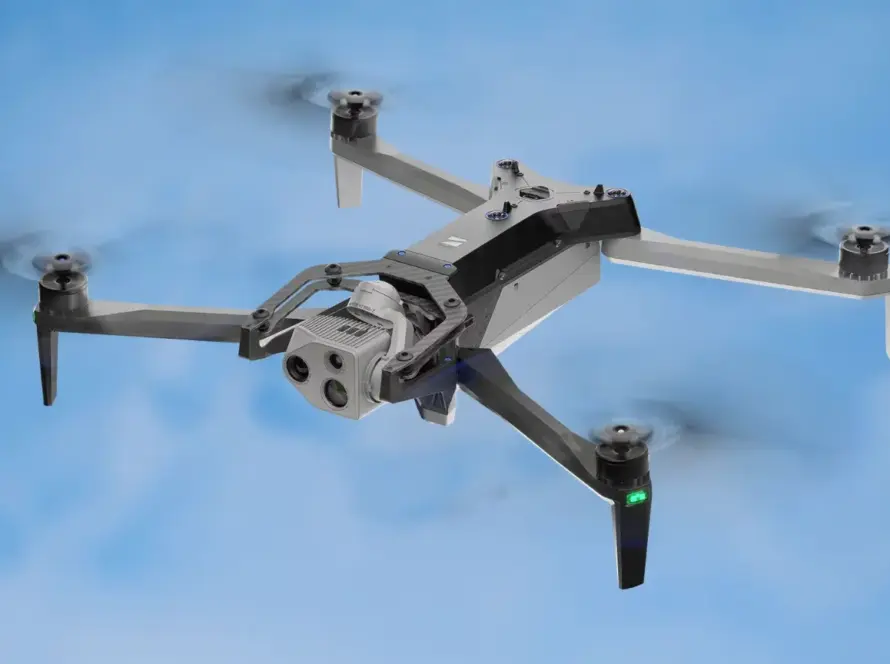
The drone industry has experienced remarkable advancements in 2025, with manufacturers pushing the boundaries of what’s possible in aerial photography, videography, and commercial applications. This year’s models showcase significant improvements in camera technology, flight performance, and intelligent features, making drones more accessible to beginners while offering professionals unprecedented creative control. Whether you’re a content creator looking to capture stunning aerial footage, a photographer seeking unique perspectives, or a commercial operator requiring industrial-grade capabilities, the drone market of 2025 offers options for every need and budget.
The evolution of drone technology has been particularly noticeable in several key areas. Obstacle avoidance systems have become more sophisticated, with many models now featuring omnidirectional sensing capabilities that greatly reduce the risk of collisions. Battery technology has also seen notable improvements, with flight times extending beyond the 45-minute mark in some professional models. Additionally, regulatory compliance has become increasingly important, with features like Remote ID now being standard on most drones sold in major markets like the United States and European Union.
In this comprehensive guide, we’ll examine the top drones of 2025 based on extensive testing, expert reviews, and user feedback. We’ve categorized our recommendations to help you find the perfect drone for your specific needs, whether you’re a beginner looking for an easy-to-fly model or a professional requiring advanced camera capabilities and industrial features.
#1 Overall Best Drone: DJI Mavic 4 Pro
The DJI Mavic 4 Pro stands as the undeniable king of consumer drones in 2025, offering an unparalleled combination of imaging capabilities, flight performance, and professional features. As the successor to the highly acclaimed Mavic 3 Pro, this model represents the pinnacle of DJI’s innovation, featuring a revolutionary triple-camera system that sets new standards for aerial photography and videography.
Key Features and Specifications
-
Camera System: The Mavic 4 Pro boasts a triple-camera array featuring a 25MP Micro Four Thirds wide-angle camera with variable aperture (f/2.0-f/11), a 12MP 1/1.3-inch sensor with 70mm equivalent telephoto lens, and a 12.5MP 1/1.5-inch sensor with 168mm equivalent periscope telephoto lens. This versatile setup allows photographers to capture everything from expansive landscapes to distant subjects without sacrificing image quality .
-
Video Capabilities: With support for 6K video recording at up to 60fps and 4K at 120fps, the Mavic 4 Pro delivers breathtaking video quality with exceptional detail and dynamic range. The inclusion of 10-bit D-Log M color profile provides professional color graders with extensive flexibility in post-production .
-
Flight Performance: DJI has equipped the Mavic 4 Pro with an advanced O3+ transmission system that provides a reliable connection up to 15 km away. The drone offers a maximum flight time of 51 minutes under ideal conditions, though real-world use typically yields around 37 minutes when capturing footage. With a top speed of 60.4 mph in Sport Mode, it can easily handle fast-paced action shots .
-
Safety Features: Omnidirectional obstacle sensing with advanced AI algorithms allows the Mavic 4 Pro to navigate complex environments with confidence. The enhanced Return to Home function now works without requiring GPS, making it more reliable in various environments .
Pros and Cons
Pros:
-
Exceptional image quality from triple-camera system
-
Outstanding flight time and transmission range
-
Advanced obstacle avoidance and safety features
-
Compact, foldable design despite professional capabilities
Cons:
-
Premium price point puts it out of reach for casual users
-
Slightly larger and heavier than sub-250g drones, triggering stricter regulations in some areas
Ideal User Profile
The DJI Mavic 4 Pro is designed for professional photographers, videographers, and serious enthusiasts who demand the highest quality aerial imaging capabilities. Its versatile camera system makes it suitable for a wide range of applications, from commercial photography and filmmaking to real estate and landscape photography. While its price tag may be prohibitive for beginners, it represents an excellent investment for professionals who rely on aerial imaging in their work .
#2 Best Drones for Beginners
DJI Flip – Editor’s Choice for Beginners
The DJI Flip has emerged as the top recommendation for beginners in 2025, offering an ideal balance of user-friendly features, safety, and imaging capabilities at an accessible price point. Weighing in at under 250 grams, it sidesteps FAA registration requirements for recreational pilots in the United States, making it immediately more appealing to newcomers .
What sets the Flip apart is its innovative design with integrated propeller guards that enable palm launches and landings, significantly reducing the intimidation factor for first-time pilots. These guards also provide protection during incidental contact with objects, making it more durable while beginners learn the ropes of drone flight .
The Flip captures impressive 4K60 HDR video and 48MP photos from its 1/1.3-inch CMOS sensor, delivering image quality that rivals flagship smartphones. For beginners looking to create content for social media or capture family memories, this level of quality is more than sufficient. The drone also features forward and downward obstacle sensors, providing basic protection while flying .
With a flight time of up to 31 minutes per charge, beginners get ample practice time without constant battery swaps. The included remote control offers intuitive operation, though the drone can also be controlled via smartphone app or on-aircraft controls for ultimate convenience .
Pros:
-
No FAA registration required (under 250g)
-
Integrated propeller guards for safety
-
Excellent 4K60 HDR video quality
-
Multiple control options (remote, smartphone, or onboard)
-
Forward and downward obstacle sensors
Cons:
-
Limited built-in storage (only 1.9GB)
-
Lack of Remote ID may restrict professional use
DJI Mini 4K – Best Budget Option
For those on an even tighter budget, the DJI Mini 4K represents an outstanding value proposition at under $300. While it lacks some of the advanced features of the Flip, it maintains the sub-250g weight classification and delivers solid 4K video quality with a 3-axis gimbal for stable footage .
The Mini 4K shares the same compact form factor as its more expensive siblings in the Mini series, making it highly portable. It offers a flight time of approximately 31 minutes and a range of up to 10km with the standard remote controller. For beginners who want to experiment with drone photography without a significant financial commitment, the Mini 4K is arguably the best entry point available in 2025 .
Pros:
-
Extremely affordable price point
-
Good 4K video quality for the price
-
3-axis gimbal stabilization
-
No FAA registration required
-
Compact and portable design
Cons:
-
No obstacle avoidance sensors
-
Limited to basic flight modes without advanced tracking features
#3 Best Drones for Photography & Videography
Autel EVO II Pro V3 – Top Choice for Professionals
The Autel EVO II Pro V3 stands as a formidable alternative to DJI’s offerings, particularly for photographers and videographers who value image quality and creative control. Its standout feature is the 1-inch Sony CMOS sensor capable of capturing 6K video and 20MP still images with an adjustable aperture ranging from f/2.8 to f/11 .
This adjustable aperture gives photographers crucial control over depth of field and exposure, particularly in challenging lighting conditions. The EVO II Pro V3 also features Autel’s Moonlight Algorithm 2.0 technology, which enables impressive low-light performance with ISO capabilities up to 44,000—significantly expanding shooting possibilities beyond daylight hours .
With a flight time of 40 minutes and a transmission range of up to 9.3 miles using the SkyLink 2.0 system, the EVO II Pro V3 offers substantial operational flexibility. It also features omnidirectional obstacle avoidance with 19 different sensors, providing comprehensive protection during complex shots .
Pros:
-
Excellent 6K video quality from 1-inch sensor
-
Adjustable aperture (f/2.8-f/11) for creative control
-
Outstanding low-light performance
-
Omnidirectional obstacle avoidance
-
No geofencing restrictions (appeals to commercial operators)
Cons:
-
Higher price point than comparable DJI models
-
Less refined intelligent flight modes compared to DJI
DJI Air 3S – Best for Enthusiasts
Sitting between the Mini series and the Mavic series in both price and capability, the DJI Air 3S offers an impressive dual-camera system that appeals to photography enthusiasts looking to step up their aerial imaging game. Its setup includes a 1-inch CMOS wide-angle camera (50MP) and a 1/1.3-inch CMOS medium telephoto camera (48MP) with 3x optical zoom .
This dual-camera arrangement provides creative flexibility that single-camera drones can’t match, allowing operators to switch focal lengths without sacrificing image quality. The Air 3S captures 4K/60fps video with support for 10-bit D-Log M color profile, giving videographers ample flexibility in color grading .
With a flight time of 45 minutes and DJI’s renowned O3 transmission system, the Air 3S offers reliable performance even at extended distances. It also features omnidirectional obstacle sensing and enhanced Nightscape mode for improved low-light performance .
Pros:
-
Versatile dual-camera system
-
Excellent 4K video quality
-
45-minute flight time
-
Omnidirectional obstacle avoidance
-
Compact, foldable design
Cons:
-
Smaller sensors than professional models
-
Higher price than entry-level options
#4 Best FPV/Racing Drones
DJI Avata 2 – Immersive Flight Experience
The DJI Avata 2 has established itself as the premier choice for first-person view (FPV) drone enthusiasts in 2025, offering an exhilarating flight experience that combines high-speed performance with relative ease of use compared to traditional FPV drones. Unlike cinematic drones that prioritize stable footage, the Avata 2 is designed for immersive flight, allowing pilots to feel as though they’re in the cockpit as they navigate through challenging environments .
The Avata 2 features a 1/1.3-inch sensor capable of capturing 4K/60fps video with a super-wide 155-degree field of view that perfectly conveys the adrenaline rush of FPV flight. Built-in propeller guards provide protection during inevitable bumps and crashes, making it more durable than exposed FPV racing drones .
With the optional DJI Goggles 3, pilots experience an immersive view from the drone’s perspective with incredibly low latency. The motion controller allows intuitive flight by simply pointing where you want to go, while the traditional stick controller offers more precise control for experienced FPV pilots .
Pros:
-
Thrilling, immersive FPV experience
-
4K video capture despite acrobatic flight
-
Built-in propeller guards for durability
-
Multiple control options (motion and traditional)
-
Reliable video transmission even at high speeds
Cons:
-
FPV flying can cause motion sickness in some users
-
Requires a visual observer for legal compliance in many areas
-
Shorter flight time (23 minutes) than cinematic drones
#5 Best Professional/Industrial Drones
DJI Matrice 30T – Enterprise-Grade Solution
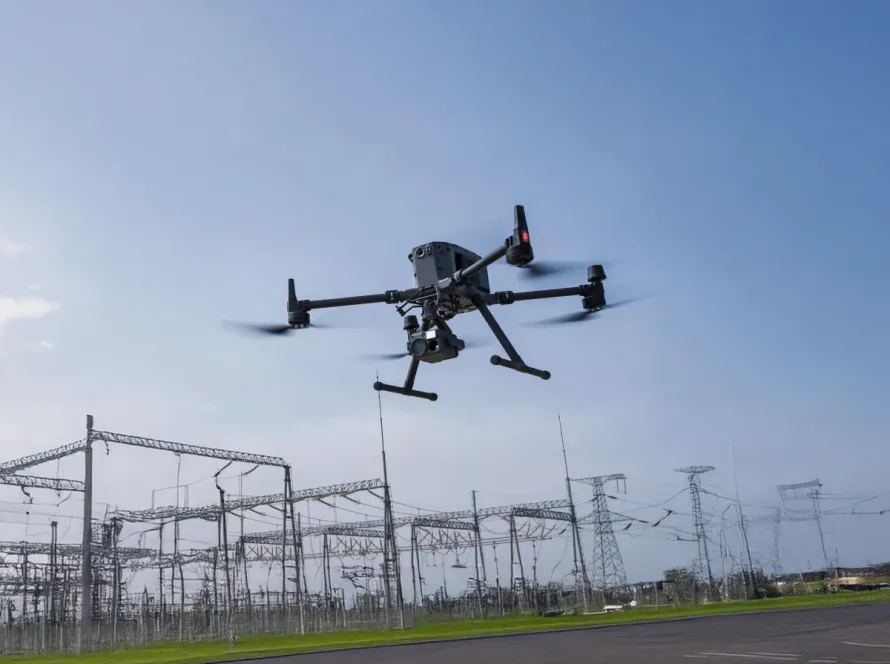
For commercial and industrial applications, the DJI Matrice 30T stands in a class of its own, offering rugged reliability and specialized capabilities designed for professional use cases like infrastructure inspection, public safety, and mapping. Unlike consumer drones, the Matrice 30T is built as a modular platform that can be configured with various payloads depending on the mission requirements .
The Matrice 30T integrates multiple imaging systems including a 12MP wide camera, a 48MP zoom camera with up to 200x hybrid zoom, and a 640×512 thermal camera with radiometric capabilities. This combination allows operators to capture comprehensive data in a single flight, making it invaluable for applications like search and rescue, power line inspection, and building diagnostics .
With an IP55 rating, the Matrice 30T can operate in adverse weather conditions that would ground consumer drones. It functions in temperatures from -20°C to 50°C and features a robust design that can withstand the rigors of daily professional use. The drone offers a flight time of approximately 55 minutes depending on payload and conditions .
Pros:
-
Multiple integrated cameras (visual, zoom, thermal)
-
Rugged, weather-resistant construction
-
Long flight time for professional applications
-
Modular design for various payloads
-
Enterprise-grade reliability and support
Cons:
-
Extremely high price point (over $12,000)
-
Large and heavy compared to consumer drones
-
Requires specialized training to operate effectively
Table: Comparison of Top Drone Recommendations for 2025
| Model | Best For | Camera Quality | Flight Time | Price Range |
|---|---|---|---|---|
| DJI Mavic 4 Pro | Overall Best/Professionals | Triple camera: 25MP MFT, 12MP tele (2x), 12.5MP periscope | 51 minutes | $$$$ |
| DJI Flip | Beginners | 48MP photos, 4K60 video | 31 minutes | $$ |
| DJI Mini 4K | Budget Buy | 4K video, 12MP photos | 31 minutes | $ |
| Autel EVO II Pro V3 | Photography/Videography | 6K video, 1-inch sensor | 40 minutes | $$$ |
| DJI Air 3S | Enthusiasts | Dual camera: 50MP wide, 48MP tele | 45 minutes | $$$ |
| DJI Avata 2 | FPV/Racing | 4K/60fps, 155° FOV | 23 minutes | $$$ |
| DJI Matrice 30T | Professional/Industrial | Wide, zoom, thermal cameras | 55 minutes | $$$$$ |
Comprehensive Buyer’s Guide: Choosing the Right Drone in 2025
Selecting the perfect drone requires careful consideration of several factors beyond just price and camera specifications. Understanding how you plan to use your drone and what features matter most for your specific needs will help you make the right choice.
Key Considerations When Choosing a Drone
-
Intended Use: Are you primarily interested in aerial photography, videography, racing, or commercial applications? Your answer will significantly narrow down your options. Photography enthusiasts should prioritize camera quality and stabilization, while FPV fans will care more about speed and immersion .
-
Camera Quality: Look beyond resolution numbers alone. Consider sensor size (larger sensors generally perform better in low light), aperture (adjustable apertures offer more creative control), and color profiles (Log profiles provide greater flexibility in post-production) .
-
Flight Performance: Flight time determines how long you can stay airborne per battery charge, while wind resistance affects stability in challenging conditions. Transmission range is less critical than in past years since most drones exceed visual line-of-sight limits, but reliable connectivity remains important .
-
Safety Features: Obstacle avoidance sensors help prevent crashes, particularly valuable for beginners flying in complex environments. Return-to-Home functions automatically bring the drone back if signal is lost or battery is low .
-
Portability: If you plan to travel with your drone, consider its folded dimensions and weight. Sub-250g drones like the DJI Flip and Mini 4K offer advantages in portability and regulatory compliance .
-
Regulatory Compliance: In the United States, drones weighing over 250g require FAA registration for recreational use and Remote ID compliance. Commercial use requires a Part 107 certificate regardless of weight. Similar regulations exist in other countries .
-
Budget Considerations: Beyond the initial drone cost, factor in additional expenses like extra batteries, carrying cases, insurance, and potential accessories (filters, landing pads, etc.) .
Frequently Asked Questions (FAQs)
1. Do I need a license to fly a drone in 2025?
For recreational use in the United States, drones under 250g do not require FAA registration (though you must follow safety guidelines). Drones over 250g require FAA registration for recreational use. Commercial drone operations require a Part 107 certificate regardless of drone weight. Similar regulations exist in other countries, so always check local rules .
2. What is the significance of the 250g weight limit?
Drones under 250g, like the DJI Flip and Mini 4K, are exempt from FAA registration requirements for recreational use in the United States. They also face fewer restrictions in some other countries, though regulations vary globally. This makes sub-250g drones particularly appealing to beginners and travelers .
3. How important is obstacle avoidance for beginners?
Obstacle avoidance is highly valuable for beginners as it provides a safety net while learning piloting skills. Models like the DJI Flip with forward and downward sensors help prevent crashes during takeoff, landing, and forward flight. However, no obstacle avoidance system is perfect, so beginners should still practice in open areas .
4. What is Remote ID and why is it important?
Remote ID functions like a digital license plate for drones, broadcasting identification and location information. In the United States, most drones over 250g are required to have Remote ID compliance for operations after September 16, 2023. This helps authorities monitor airspace and identify unauthorized drones .
5. Can I fly drones in urban areas?
Drone flight in urban areas is subject to restrictions that vary by location. Generally, you must avoid flying over people, moving vehicles, and protected spaces. Many drones have geofencing systems that prevent flight in restricted areas, but pilots are ultimately responsible for knowing and following local regulations .
6. How does weather affect drone flight?
Rain, strong winds, and extreme temperatures can all impact drone performance and safety. Most consumer drones are not waterproof and should not be flown in rain. Wind can reduce flight time and stability, with smaller drones generally more affected. Always check weather conditions before flying and avoid adverse conditions .
7. What is the average battery life of consumer drones?
In 2025, most consumer drones offer flight times between 20-45 minutes per battery charge, with professional models typically offering longer endurance. Real-world flight times are often 5-10 minutes less than manufacturer claims due to factors like wind, maneuvering, and payload .
Conclusion: Finding Your Perfect Drone in 2025
The drone market in 2025 offers an impressive range of options catering to every possible need, budget, and skill level. For beginners and those on a budget, the DJI Flip and DJI Mini 4K provide outstanding value with their sub-250g weight classification and capable imaging systems. Photography enthusiasts should consider the DJI Air 3S for its versatile dual-camera system, while professionals may find the Autel EVO II Pro V3 or DJI Mavic 4 Pro better suited to their high-end imaging requirements.
FPV enthusiasts have an excellent option in the DJI Avata 2, which combines exhilarating flight characteristics with relative ease of use compared to traditional racing drones. For commercial and industrial applications, the DJI Matrice 30T stands unmatched with its rugged design, multiple imaging capabilities, and enterprise-grade features.
When making your decision, consider not just the upfront cost but also how you plan to use your drone, what features are most important for your specific needs, and what regulatory requirements apply in your area. Whatever you choose, today’s drones offer incredible capabilities that were unimaginable just a few years ago, opening up creative possibilities for photographers, videographers, and hobbyists alike.