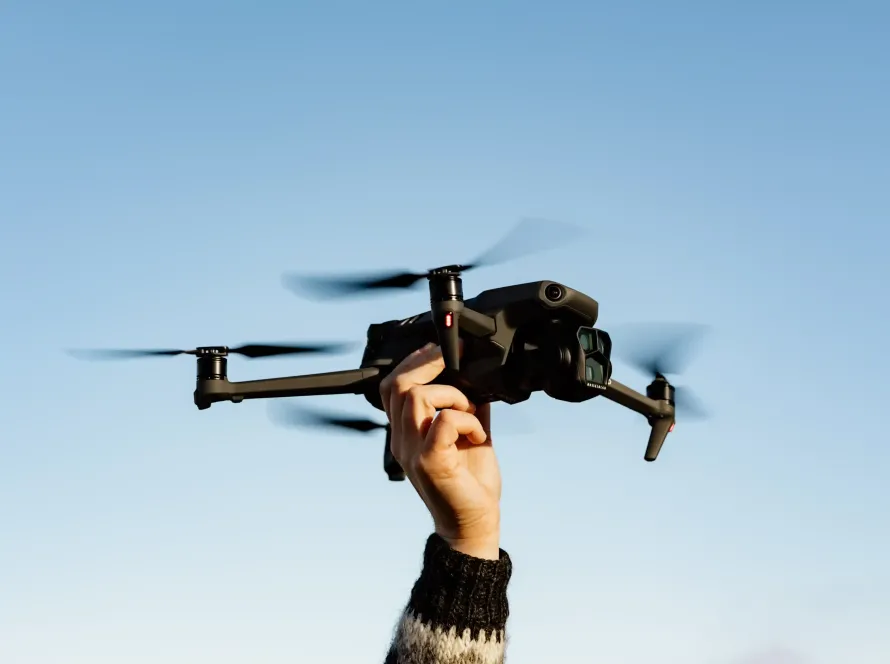
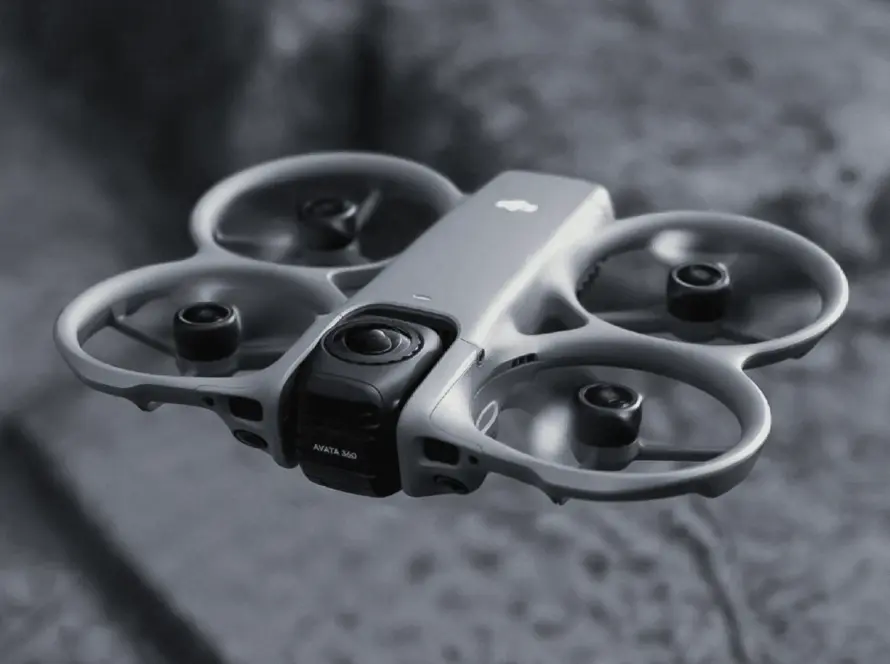
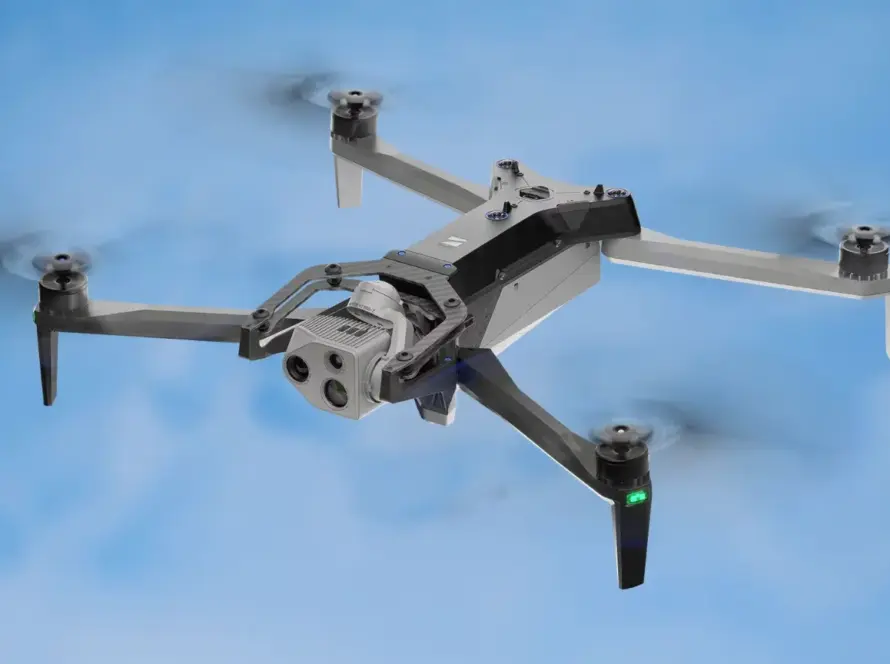
The drone and camera technology landscape is experiencing unprecedented transformation in August 2025, with major developments reshaping both consumer and commercial markets. From revolutionary new products to critical regulatory changes, this week’s developments signal a pivotal moment for the industry.
1. Drone Industry Headlines: Competition Heats Up
Insta360’s Antigravity A1: A Game-Changing Entry
The most significant development this week is Insta360’s official entry into the drone market with the launch of the Antigravity A1 on August 14, 9 a.m. EDT, marking the debut of Antigravity as a new independent brand focused on 360-degree aerial storytelling.1 The Antigravity A1 represents the world’s first drone to feature 8K 360-degree capture, combining an immersive flying experience with intuitive controls designed for creators, families, and first-time pilots.2
At the center of the A1 is a dual-lens system with cameras mounted on the top and bottom of the drone, allowing full 360-degree capture with no blind spots.2 This innovative approach eliminates the traditional challenge of framing shots mid-flight, making drone photography accessible to beginners while offering professionals unprecedented creative flexibility.
DJI Faces Market Uncertainty
DJI still dominates the global consumer drone market, but the company is entering uncharted territory in the US, facing potential exclusion unless a mandated security review takes place by December 2025, yet none has begun, while customs delays are disrupting DJI’s US supply chains.1 Despite these challenges, DJI continues its product development, with rumors suggesting several new releases planned for late 2025.
Taiwan’s Military Drone Innovation
In the defense sector, Taiwan is rapidly developing a naval drone capability, with several types being trialled with a range of armaments that could enable Taiwan to disrupt and weaken an invasion fleet headed for the island.3 The Kuaiqi, which closest matches Ukrainian designs, features a low profile hull with two Cox diesel outboards providing 43 knots performance, equipped with Kymeta satellite communications and weapons including an explosive ‘ram charge’ in the bow, a hangar for quadrotor drones, and six launch tubes for loitering munitions.3
2. U.S. Regulatory Revolution: BVLOS Rules Transform Commercial Drone Operations
Historic FAA Announcement
Transportation Secretary Sean Duffy announced a proposal to lay out the process by which companies could be approved to use drones in U.S. airspace and the rules they would have to follow, replacing the previous case-by-case waiver system.4 Under the proposed rule, drones used by businesses would have to be built to certain industry standards and have collision avoidance technology to ensure they maintain a safe separation from other aircraft, including commercial airplanes, with commercial drones banned from flying over large outdoor gatherings.4
Industry Response
Industry leaders are praising the move, with AUVSI President Michael Robbins stating that the draft rule is “a critical step toward enabling drone operations that will enhance safety, transform commercial services, and strengthen public safety with drones as a force multiplier.”5
3. Camera Technology Updates: Canon, Sony, and Nikon’s 2025 Roadmap
Canon’s Strategic Moves
The widely held consensus is that Canon will release the EOS R6 Mark III in the first quarter of 2025, most likely to coincide with CP+ in Japan from February 27 to March 2.6 Rumored improvements include an upgraded EVF and an entirely new OLED touchscreen with dual-axis flip-out and rotate movements, similar to the one seen on the Sony A9 III.6
Nikon’s RED Integration
Nikon is rumored to be launching the Nikon ZR, where the “R” stands for “Red”, with the camera potentially being Sony FX3-like in form and/or function, likely featuring the 24.5MP partially stacked sensor from the Nikon Z6 III.7
Sony’s Anticipated Releases
In 2025, Sony is expected to stay busy as the company continues to compete with Canon for market dominance, with expectations for several new Sony Alpha cameras for professional photographers and videographers and some new ZV cameras for vloggers and content creators.8
4. DJI Product Pipeline Despite Challenges
Mini 5 Pro Anticipation
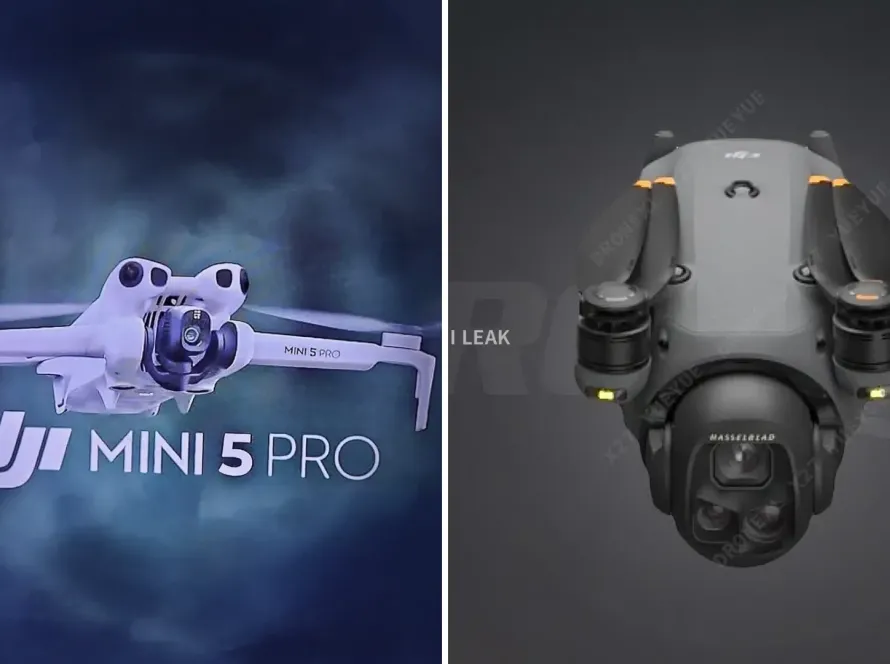
DJI Mini 5 Pro rumors suggest a release in August or September 2025, with expected features including a 1-inch camera sensor, LiDAR for obstacle avoidance, 50-minute flight time, and a 25 km range, all while staying under 250g.9 The camera will feature a 1-inch CMOS sensor enhancing image quality and low-light performance, LiDAR technology for advanced APAS 6.0 (360º) safety, up to 50 minutes flight time with 25 km range, and additional features including integrated microphone for vlogging, new Active Track algorithm, and gesture control with 20 commands.9
DJI Osmo 360 Launch
DJI’s Osmo 360, confirmed for launch on July 31, 2025, features video capabilities of 8K/30fps and 4K/120fps with 170° FOV, a 1-inch CMOS sensor with f/1.9 aperture for stunning low-light performance, and OsmoAudio™ Direct Mic Support for dual mic transmitters, magnetic quick-release, gesture and voice control.9
5. Action Camera Battle: GoPro vs. Insta360
GoPro’s Challenges and Opportunities
GoPro usually announces a new flagship camera every September, and based on past launches, the GoPro Hero 14 Black is expected to arrive in September 2025.10 Industry observers note that instead of redefining the category, the Hero 12 delivered refinements — not revolution, and to win back creators, GoPro can’t afford another incremental update, needing to upgrade to at least a 1/1.3″ or 1″ sensor to compete with DJI and Insta360.11
Insta360’s Innovation Lead
Insta360 has revealed the launch date of its next tiny action camera, the Insta360 Go Ultra, which will replace the Insta360 Go 3S with a design almost as small as the DJI Action 2, with the launch event commencing on Thursday, August 21, at 13:00 UTC.12
6. Commercial Drone Delivery Expansion
GoTo Foods latest entry in the Dallas/Fort Worth drone delivery race recently launched, partnering with Wing and DoorDash to bring fast food to customers’ doorsteps via UAV in the region that has become a leading hub for drone-delivery services.2 Flytrex just received FAA approval to operate drones beyond visual line of sight (BVLOS), making it only the fourth US company to earn this coveted approval — joining Wing (Google), Amazon, and Zipline.13
7. Emerging Technologies and Future Trends
Avalanche Safety Innovation
For nearly 80 years, avalanche safety crews in Canada have battled unstable snow with World War II artillery, helicopter drops, and risky ground missions, but now a Canadian drone company has developed a safer, faster, and more precise way with government approval.13
HoverAir’s Waterproof Innovation
HoverAir has set a date for its most ambitious drone yet, confirming that the HoverAir Aqua, a fully waterproof, self-flying camera drone, will launch via an Indiegogo crowdfunding campaign on Thursday, August 21, at 9 a.m. PDT.13
Industry Analysis: What This Means for Content Creators and Businesses
The convergence of regulatory reform, technological innovation, and market competition is creating unprecedented opportunities for both creators and commercial operators. The BVLOS regulations will enable new business models in delivery, inspection, and emergency services, while consumer products are becoming more accessible and feature-rich.
The entry of Insta360 into the drone market with 360-degree technology represents a paradigm shift in aerial photography, eliminating traditional barriers to entry while offering professionals new creative tools. Meanwhile, DJI’s challenges in the US market are creating opportunities for competitors to gain market share.
Looking Ahead: What to Expect
As we move through the remainder of 2025, expect to see:
- Continued innovation in AI-powered flight and editing features
- More companies entering the drone delivery space
- Further integration of cinema-quality cameras in consumer drones
- Expansion of 360-degree capture technology across product lines
- Increased focus on safety features and regulatory compliance
The drone and camera industries are at an inflection point, with technological advancement, regulatory clarity, and market competition driving innovation at an unprecedented pace. Whether you’re a professional content creator, commercial operator, or enthusiast, the developments of August 2025 mark the beginning of a new era in aerial and imaging technology.