The Jordan Valley—often referred to as Jordan’s food basket—is a fertile agricultural hub producing vegetables, citrus fruits, and dates. However, farmers in this region face pressing water shortages, high input costs, and shifting climate patterns. To survive and thrive, the agricultural sector is adopting smart farming technologies, specifically commercial agricultural drones that inspect crop health and spray treatments with unmatched precision.
Quick Summary & Direct Answer
Agricultural drone services in the Jordan Valley utilize multispectral cameras to calculate NDVI (Normalized Difference Vegetation Index) maps for crop health audits, alongside heavy-lift agricultural spraying drones (like the DJI Agras T50) that apply water, fertilizer, and pesticides. These drone workflows reduce chemical usage by 30%, save water by up to 90%, and cover large fields 40x faster than traditional manual spraying.
Multispectral Inspection and NDVI Mapping for Crop Audits
By capturing light wavelengths that are invisible to the human eye, multispectral sensors analyze how leaves reflect near-infrared light. Healthy plants reflect high amounts of infrared light, while stressed plants (suffering from disease, pests, or water shortage) reflect much less. Processing this aerial imagery yields NDVI crop health maps, allowing agricultural managers to target fertilizer application only where needed, saving costs and protecting soil health.
Precision Spraying Drones: Saving Water and Reducing Chemicals
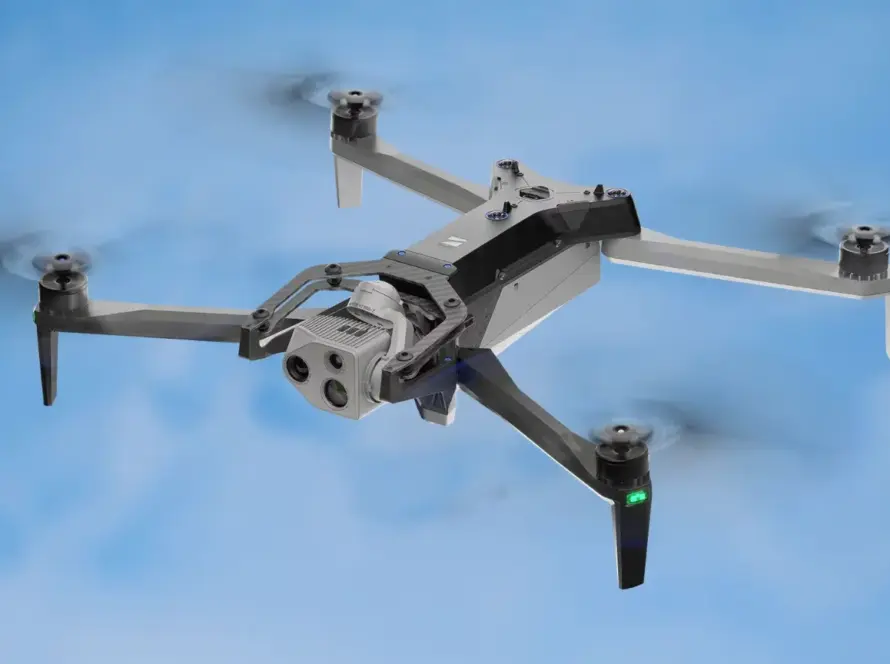
Traditional tractor or manual backpack spraying is inefficient, often leading to over-spraying that runs off into groundwater. Heavy-lift agricultural spraying drones solve this problem. Equipped with atomizing nozzles and intelligent terrain-following radar, these drones fly centimeters above the crop canopy, applying localized micro-doses. This precision reduces overall chemical costs and water consumption dramatically, which is crucial in a water-scarce country like Jordan.
Drone Spraying vs. Traditional Tractor & Manual Spraying
| Operational Factor | Traditional Spraying (Tractor / Manual Backpack) | Precision Drone Spraying (DJI Agras T50) |
|---|---|---|
| Water Consumption | High (Requires large mixing tanks and heavy run-off) | Low (Saves up to 90% water via ultra-low-volume atomization) |
| Chemical Waste | High (Uniform application ignores healthy vs. sick zones) | Low (Targeted micro-doses reduce chemical use by 30-40%) |
| Soil Compaction | High (Heavy tractors damage crop roots and pack soil) | Zero (Aerial flight has no physical contact with the soil) |
| Terrain Accessibility | Difficult on steep slopes, wet fields, or dense orchards | Universal (Flies easily over muddy soils and terraced farms) |
| Coverage Speed | Slow (Hours of manual labor exposing workers to chemicals) | Fast (Can spray up to 15-20 hectares of crops per hour) |
Precision Smart Farming with Loyalty Drones
Loyalty Drones is proud to bring precision agriculture solutions to Jordan’s farm managers. By combining multispectral NDVI analysis with advanced spraying drone technology, we help Jordan Valley growers cut input costs, save water, and improve overall harvest yields.
Partner with Loyalty Drones
Implement smart farming on your Jordan Valley estate. Contact the agricultural experts at Loyalty Drones today.