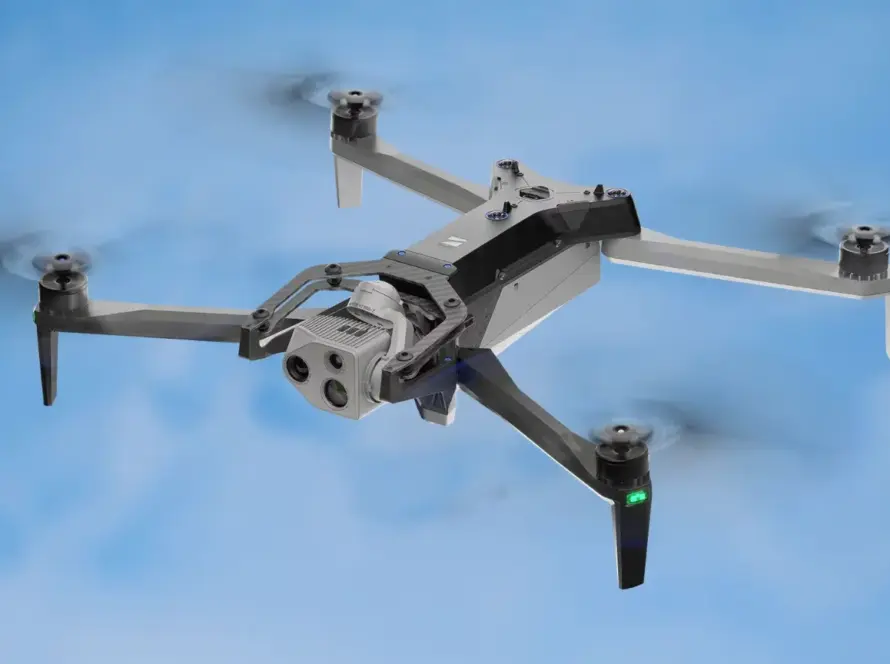
In a groundbreaking achievement that promises to redefine the commercial drone industry, Silicon Valley startup SiFly has officially claimed a Guinness World Record for electric drone endurance. The company’s Q12 drone recently completed an astonishing 3-hour, 11-minute continuous flight—nearly an hour longer than the previous record. This remarkable feat wasn’t just a publicity stunt but a demonstration of transformative technology that bridges the gap between traditional drone capabilities and helicopter-level performance at a fraction of the cost. Coming at a pivotal moment when the FAA is finalizing new beyond visual line of sight (BVLOS) regulations, SiFly’s achievement signals a new era for unmanned aerial systems that could unlock countless commercial applications previously considered impossible .
This article provides an in-depth look at SiFly’s record-breaking flight, the technological innovations behind it, and the profound implications for industries ranging from public safety to agriculture. We’ll examine how this achievement aligns with regulatory developments and what it means for the future of autonomous aerial operations.
The Record-Setting Flight: Details and Significance
The Historic Achievement
On July 26, 2025, at Amaral Ranches in California’s Salinas Valley, SiFly’s Q12 drone lifted off at sunrise and began what would become a record-making flight. Under the rigorous validation requirements of Guinness World Records, the flight was documented by eight official witnesses, including notable figures like Paul Baker, Distinguished Engineer at Apple, and Chris Silva, Research Aerospace Engineer at NASA Ames Research Center. The previous record for electrically powered multirotor drones (weighing 5-20 kg) was surpassed by nearly an hour, cementing SiFly’s position at the forefront of drone endurance technology .
Flight Parameters and Performance
During the record-setting flight, the Q12 drone operated autonomously in a 600-meter-wide orbit at approximately 50 meters altitude, maintaining an airspeed of about 31 mph. The company deliberately chose a large orbit pattern to account for the additional power consumption required during constant turning maneuvers. The flight continued until the battery reached just 2% capacity, at which point the drone was brought to a hover to drain remaining power before making a gentle landing .
Table: SiFly Q12 Record Flight Parameters
| Aspect | Detail |
|---|---|
| Date | July 26, 2025 |
| Location | Amaral Ranches, Salinas Valley, California |
| Flight Duration | 3 hours, 11 minutes |
| Altitude | Approximately 50 meters |
| Airspeed | 31 mph |
| Orbit Size | 600-meter width |
| Witnesses | 8 official witnesses including NASA and Apple engineers |
Technical Innovations Behind the Breakthrough
Revolutionary Power Management
SiFly’s achievement wasn’t accidental but the result of years of engineering focused on overcoming the fundamental limitations of electric multirotor drones. One of the most significant breakthroughs came in power management. Brian Hinman, SiFly’s Founder and CEO, explained that while the optimal battery weight fraction for rotorcraft is about two-thirds, SiFly has approached this target with batteries accounting for approximately 60% of the drone’s total weight .
Unlike typical electric vertical takeoff and landing (eVTOL) batteries that discharge rapidly, the Q12’s power system discharges at about one-sixth the rate, meaning the drone doesn’t require any exotic battery chemistries yet achieves remarkable endurance. Hinman describes the design as essentially “a giant flying battery,” with a cavernous central compartment that accommodates a massive battery brick .
Aerodynamic Efficiency
While conventional quadcopters are often described as “flying bricks” with minimal aerodynamic properties, SiFly took a completely different approach. The company asked: “What can we do to make a quadcopter optimized for forward flight?”
The answer came in several key innovations:
-
Low Disc Loading: The Q12 features large rotors that enable low disc loading and greater efficiency, contrasting with smaller rotors that require more power to generate lift
-
Propeller Design: Unlike typical quadcopter blades with complex taper and twist, the Q12 uses smooth, flat blades that significantly reduce aerodynamic drag
-
Multiple Blades: Using multiple blades allows the rotor to spin slower, making the aircraft “virtually silent” at 100 meters altitude
-
Forward Tilt: The rotor plane is tilted about 10 degrees forward, allowing the nose to angle up during hover and level out at cruise speed
These innovations collectively contribute to a lift-to-drag ratio of 4.0, placing it in the range of helicopters, with company leadership noting that a ratio of 7.0 is “very achievable” .
Modular and Scalable Design
The Q12 features a fully modular, all-electric architecture that allows for quick battery swaps and easy transportation. The drone can be broken down small enough to fit within checked airplane luggage, significantly enhancing its operational flexibility. Unlike many systems that require specialized docking stations for takeoff, landing, and charging, the Q12 operates independently, with unused battery packs charged while the drone is airborne to enable rapid turnaround times .
Market Context and Regulatory Landscape
The $35 Billion Industrial Drone Market
SiFly’s achievement comes as the industrial drone market is projected to exceed $35 billion by 2030, driven by capabilities beyond the limits of current systems. Today’s commercial drones are typically limited to flight times of 20-30 minutes with relatively light payload capacities, severely restricting their operational potential. The Q12’s ability to carry a 10-pound payload for 3+ hours with a 90-mile range positions SiFly to disrupt not only the existing drone market but also to capture missions traditionally dominated by light helicopters .
FAA’s Part 108 Rule: Enabling BVLOS Operations
The timing of SiFly’s achievement is particularly significant given the FAA’s recent proposal of the Part 108 rule for beyond visual line of sight (BVLOS) operations. Unveiled on August 5, 2025, this groundbreaking proposed rule would normalize BVLOS operations without requiring individual waivers, which have been granted only sparingly since 2020 .
The proposed rule creates a comprehensive framework for safe drone operations in shared airspace, offering two primary authorization pathways:
-
Permits: For lower-risk operations, typically involving smaller fleets and lighter aircraft
-
Certificates: For higher-risk operations involving larger aircraft or extensive fleets with more stringent oversight
Industry leaders have widely welcomed the proposed rule, with Lisa Ellman, CEO of the Commercial Drone Alliance, noting: “Our industry has been waiting for this day for quite a while now” .
Table: FAA Part 108 Proposed Rule Key Aspects
| Aspect | Description |
|---|---|
| Purpose | Normalize BVLOS operations without individual waivers |
| Authorization Pathways | Permits (lower-risk) and Certificates (higher-risk) |
| Maximum Takeoff Weight | Up to 1,320 pounds for certified operations |
| Key Technologies | Detect-and-avoid systems, remote identification, automated data services |
| Training Requirements | Role-based training for operations supervisors, flight coordinators, and supporting staff |
Applications and Industry Implications
Public Safety and Emergency Response
The public safety sector represents one of the most promising applications for SiFly’s long-endurance technology. The Q12’s capabilities are ideally suited for Drone as First Responder (DFR) programs, where extended flight times allow drones to be deployed ahead of human responders to assess situations and provide critical information. SiFly has tested optical zoom cameras capable of reading license plates from 1,000 feet away, allowing law enforcement to operate at a safe distance from the public. The company is also exploring thermal and lidar integrations for search and rescue operations .
Agriculture and Environmental Monitoring
In agriculture, the Q12’s extended endurance enables large-area mapping and monitoring that was previously impractical with conventional drones. SiFly has already spent 18 months mapping the Amaral Ranches in California’s Salinas Valley, where the record flight took place. The combination of long flight time and significant payload capacity allows farmers to carry more sophisticated sensors for crop health monitoring, irrigation assessment, and yield prediction .
Infrastructure Inspection and Mapping
Critical infrastructure inspection—including utilities, energy pipelines, and transportation networks—often requires covering long linear corridors that challenge conventional drones with limited endurance. The Q12’s ability to hover for two hours or conduct forward flight for over three hours enables comprehensive inspection missions without frequent battery swaps. According to David Mazar, Chief Strategy Officer at SiFly, this capability “opens up new productivity to inspect long corridors versus today’s limited capability of constant battery swaps” .
Future Applications and Larger Platforms
SiFly isn’t stopping with the Q12. The company is already developing a much larger Q250 model with a 550-pound maximum takeoff weight and 237-pound payload capacity. This heavy-lift platform is envisioned as a lower-cost replacement for helicopters in applications like agricultural spraying, fire suppression, and logistics. Hinman envisions the two drones operating in concert: “In agriculture, for example, you would not want to use an expensive spraying platform to look around and find places to spray because that would be a misuse of capital.” Instead, the Q12 could identify areas needing treatment while the Q250 performs the actual spraying .
Company Background and Market Reception
From Stealth Mode to Record Breaker
SiFly emerged from stealth mode in May 2025 after conducting over 3,000 test flights . The company’s leadership brings world-class talent from aviation, technology, and entrepreneurial backgrounds, with over 65 patents and 5 previous company exits among the team . This experience has evidently contributed to the rapid development of their groundbreaking technology.
Overwhelming Market Response
The market response to SiFly’s technology has been remarkably swift and decisive. Within just 90 days of emerging from stealth, the company secured hundreds of pre-orders and letters of intent for Q12 units, with strong interest from public safety agencies, infrastructure inspectors, mapping firms, and agricultural operators . Initial deliveries are slated for early 2026, with the larger Q250 expected to follow in 2027 .
Conclusion: The Future of Long-Endurance Drones
SiFly’s world record achievement represents far more than just another milestone in drone endurance—it signals a fundamental shift in what’s possible for unmanned aerial systems. By delivering “helicopter-level performance at drone economics,” as CEO Brian Hinman describes it, the company has effectively created a new category of vertical takeoff, long-endurance aerial vehicles .
The implications of this breakthrough extend across numerous industries, from public safety to agriculture to infrastructure management. As the FAA moves toward finalizing its Part 108 rule for BVLOS operations, the timing couldn’t be better for a platform that can truly take advantage of expanded operational permissions.
With hundreds of pre-orders already secured and deliveries beginning in early 2026, SiFly has demonstrated that there’s substantial market demand for drones that can fly longer, farther, and with more payload than current systems. As the company continues to refine its technology and develop even larger platforms, we’re likely seeing just the beginning of a transformation in how we use unmanned aerial systems for commercial and public benefit applications.
The era of drones limited to 30-minute flights is coming to an end, and a new age of persistent aerial presence is beginning—thanks to pioneering efforts from companies like SiFly that are pushing the boundaries of what’s possible in unmanned aviation.
FAQs
How long did the SiFly Q12 drone fly to set the world record?
The SiFly Q12 drone achieved a flight duration of 3 hours and 11 minutes on July 26, 2025, surpassing the previous record by nearly an hour .
What makes the SiFly Q12 drone able to fly so long?
The exceptional endurance comes from several key innovations: optimized battery weight distribution (60% of total weight), efficient propeller design with low disc loading, aerodynamic improvements, and a power system that discharges at one-sixth the rate of typical eVTOL batteries .
What are the main applications for the SiFly Q12 drone?
Primary applications include: public safety (Drone as First Responder programs), agricultural mapping and monitoring, infrastructure inspection, search and rescue operations, and large-area surveying .
How does the FAA’s Part 108 rule affect BVLOS drone operations?
The proposed Part 108 rule would create a framework for routine beyond visual line of sight (BVLOS) operations without individual waivers. It offers two pathways: Permits for lower-risk operations and Certificates for higher-risk operations, with requirements for detect-and-avoid technology and remote identification .
When will the SiFly Q12 be available for delivery?
SiFly plans to begin initial deliveries of the Q12 in early 2026, with the larger Q250 heavy-lift model expected to follow in 2027 .
What is the payload capacity of the SiFly Q12 drone?
The Q12 can carry a payload of 10 pounds for up to 3 hours of forward flight or 2 hours of hover, with a range of 90 miles .
How does SiFly’s technology compare to traditional helicopters?
SiFly offers comparable endurance to light helicopters (which typically max out at 2 hours due to fuel and human fatigue limitations) but at a fraction of the cost and with zero emissions, representing what the company calls “helicopter performance at drone economics” .