The drone and camera industry is experiencing an unprecedented wave of innovation in late 2024 and 2025, with DJI leading the charge through groundbreaking product releases and tantalizing rumors. Recent leaks emerging on September 1, 2025, including the first real images showcasing a dual-camera setup for the OSMO Pocket 41, have sent shockwaves through the creator community. Meanwhile, DJI’s development of the Avata 360, their first 360 drone2, marks a pivotal shift in immersive aerial photography.
As we navigate through November 2025, DJI’s relentless innovation continues despite regulatory challenges, with the Neo 2 just launching globally – a 151-gram smart drone that can take off from your palm, follow you using gestures or voice commands, and land back on your hand3.
DJI OSMO Pocket 4: The Dual-Camera Revolution
Leaked Specifications and Features
The OSMO Pocket 4 represents a quantum leap in pocket-sized filmmaking technology. Fresh leaks from September 1, 2025, reveal the first real images showcasing a dual-camera setup1, fundamentally changing the game for content creators.
Camera System Revolution:
- A new, larger 1-inch sensor improving image quality and low-light performance, with support for 4K at 240fps allowing for super-smooth slow-motion shots, and a Hasselblad collaboration for better color accuracy4
- A groundbreaking dual-camera configuration featuring both a primary wide-angle lens and a secondary ultra-wide or telephoto option, allowing instant perspective switching5
- A potential “Infinity Gimbal” for unrestricted rotation, improved audio with noise-canceling mics, and expandable storage up to 1TB via microSD1
Display and Design Upgrades:
- A 2.5-inch touchscreen, a nice jump from the 2-inch screen in the Pocket 3, allowing clearer shots even when filming in bright daylight4
- A new set of buttons right below the screen, replacing the “Osmo” branding on the current model, which could be shortcuts for focus, mode switching, or gimbal movement6
Release Date and Pricing
Leaks point to a launch in fall 2025, potentially as early as October or November, though some whispers suggested a delay to early 2027, recent image leaks make a 2025 debut more likely1. According to YouTuber Photorabz, DJI intends to launch the Osmo Pocket 4 on December 18, with timing that would allow DJI to offer its next vlogging camera in the US before an impending FCC ban on December 237.
Pricing rumors point to a starting point around 500−600, making it competitive with rivals like the Insta360 GO series1, though most sources say the standard model will cost around $699, while the Creator Combo could be priced at $7994.
DJI Avata 360: The World’s First Consumer 360° FPV Drone
Revolutionary Design and Capabilities
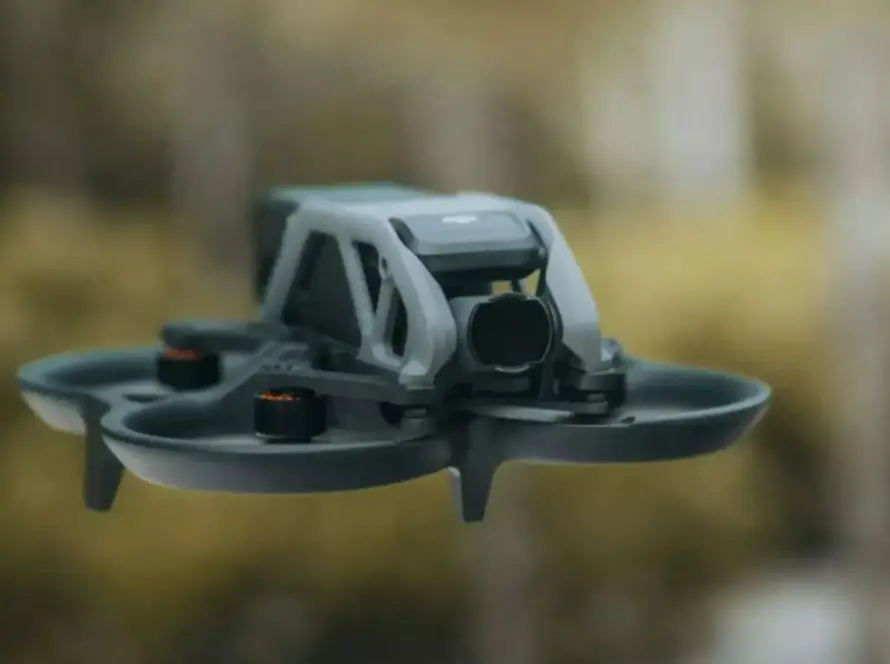
The DJI Avata 360 will capture 360 8K video, probably with the same specs as the DJI Osmo 360, but can also be flown as ‘normal’ FPV drone. With the touch of a button the 360 camera turns to frontal view right side up2.
Technical Specifications:
- Two camera sensors for 360° image stitching, with semi-protected propellers and front-facing obstacle sensors aided by dual LiDAR sensors flanking the drone’s camera housing8
- Camera hardware from the Osmo 360 with a three-axis gimbal on-hand to stabilise 8K and 360° video recordings8
- The drone should adhere to a C0 drone classification weighing less than 250 g8
Advanced Features:
- Four different sensors in the front including both a visual camera and a LiDAR plus some side sensors, suggesting potentially omnidirectional sensing and advanced tracking capabilities9
- Being flown using the DJI Goggles N3 and the DJI RC Motion 3 remote, which makes us think that maybe it runs on OcuSync 4.09
Market Positioning and Release Timeline
DJI’s launch of the Avata 360 is a clear strategic move against Insta360’s flagship drone project, the Antigravity A1, with a launch date set for January 2026. By launching the Avata 360, likely well before the Insta360 A1, DJI aims to leverage its massive brand recognition and established software ecosystem to dominate the 360 FPV space10.
Several insiders speculate the Avata 360 could launch before Christmas, possibly with a base price around $1,199 / €1,199. DJI has a history of reacting quickly to competitors, so a pre-holiday release would make strategic sense11.
DJI’s Broader 2025 Product Ecosystem
DJI Neo 2: The Smart Selfie Drone
Weighing only 151 grams, the Neo 2 is light enough to toss into a backpack but smart enough to take off from your palm, follow you using gestures or voice commands, and then land back on your hand when you’re done3.
Key Features:
- DJI’s lightest drone yet with omnidirectional obstacle sensing3
- 12-megapixel, 1/2-inch CMOS sensor with an f/2.2 aperture, with footage stabilized by a new 2-axis gimbal, shooting 4K video at up to 100 fps for cinematic slow-motion3
- ActiveTrack with faster response and smoother tracking, allowing the drone to follow subjects at speeds up to 12 m/s3
DJI Osmo Action 6: The GoPro Killer
The DJI Osmo Action 6, announced on November 18, features the world’s first variable aperture lens in an action camera with a 1/1.1-inch CMOS sensor, support for 8K at 30fps, and a variable aperture system ranging from f/2.0 to f/4.012.
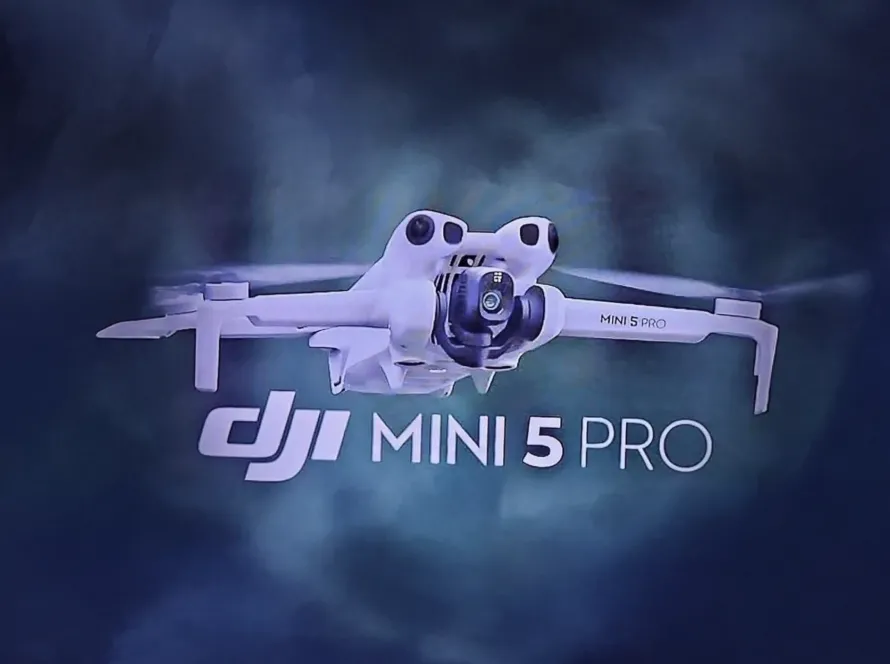
DJI Mini 5 Pro: The Ultimate Sub-250g Drone
The Mini 5 Pro continues DJI’s tradition of packing professional features into a regulatory-friendly package, though specific release details remain under wraps as of November 2025.
Industry Impact and Future Outlook
Navigating Regulatory Challenges
DJI appears to be playing it safe: continuing global rollouts but avoiding the US until the political climate stabilizes. For American consumers, that means the latest drones are arriving everywhere else first. However, units often start appearing through third-party resellers on e-commerce platforms such as Amazon3.
Competition and Market Strategy
Even with the threat of a US ban looming, DJI doesn’t seem to have any intention of slowing down. According to rumors, it appears to be hitting the accelerator pedal, perhaps pre-empting a new Congress bill that could ban both DJI and Autel Robotics from selling new drones in the US13.
What This Means for Content Creators
The convergence of these technologies represents a paradigm shift for content creators:
- Versatility: The OSMO Pocket 4’s dual-camera system eliminates the need for multiple devices
- Immersion: The Avata 360 opens new possibilities for VR and 360° content
- Accessibility: The Neo 2’s gesture controls democratize aerial photography
- Professional Quality: Hasselblad color science in consumer devices bridges the gap to professional equipment
Frequently Asked Questions (FAQs)
Q1: When will the DJI OSMO Pocket 4 be released?
According to reliable sources, DJI intends to launch the Osmo Pocket 4 on December 18, 20257, though this date isn’t officially confirmed.
Q2: What makes the Avata 360 different from regular FPV drones?
The Avata 360 captures 360 8K video but can also be flown as a normal FPV drone, with the 360 camera turning to frontal view at the touch of a button2.
Q3: How much will the OSMO Pocket 4 cost?
Most sources indicate the standard model will cost around $699, while the Creator Combo could be priced at $7994.
Q4: Is the DJI Avata 360 suitable for beginners?
Weighing less than 250g and adhering to C0 drone classification8, it’s more accessible than previous Avata models, though the advanced features suggest it targets experienced users.
Q5: Will these products be available in the United States?
Recent DJI products have launched internationally weeks or months before a US release, with the Neo 2 officially launching across Canada, Europe, and other markets, but not in the United States3.
Q6: What’s the battery life of the Neo 2?
Battery life clocks in at 19 minutes, which is in line with the Neo 2’s compact size and purpose for short, spontaneous, creative flights3.
Q7: Does the OSMO Pocket 4 really have Hasselblad technology?
Industry insiders suggest Hasselblad’s involvement would likely focus on color profiling, dynamic range optimization, and overall image processing algorithms, following their successful partnership on drone cameras5.
Q8: Can the Avata 360 be used for professional filmmaking?
With camera hardware from the Osmo 360 featuring three-axis gimbal stabilization for 8K and 360° video recordings8, it’s certainly capable of professional-quality output.
Q9: What’s the difference between the Neo and Neo 2?
The Neo 2 has a 2-axis gimbal instead of single-axis and an omnidirectional vision system plus forward-facing LiDAR14, making it significantly more capable than its predecessor.
Q10: When is the best time to buy these products?
With the DJI Osmo Pocket 3 currently enjoying a 32% discount, dropping from $799 to $5436, waiting for similar deals on new products might be wise for budget-conscious buyers.
Conclusion: The Dawn of a New Era
DJI’s 2025-2026 product lineup represents more than incremental upgrades—it’s a fundamental reimagining of what consumer drones and cameras can achieve. From the dual-camera innovation of the OSMO Pocket 4 to the immersive possibilities of the Avata 360, and the accessibility of the Neo 2, DJI continues to push boundaries despite regulatory headwinds.
For content creators, these developments promise unprecedented creative freedom. The convergence of professional features in consumer-friendly packages, enhanced by partnerships like Hasselblad, democratizes high-end filmmaking tools. As we move forward, the question isn’t whether to adopt these technologies, but how quickly creators can integrate them into their workflows.
The future of content creation is here, and it fits in your pocket—or takes off from your palm.