Drones are transforming industries, from agriculture to emergency services, but operating them safely in populated areas requires strict compliance with regulations. The European Union Aviation Safety Agency (EASA) introduced the C2 certification to ensure drones can operate closer to people while maintaining high safety standards. This blog post explores the essentials of EASA C2 certification, including operational requirements, pilot qualifications, and manufacturer responsibilities, empowering drone operators to navigate the EU’s regulatory landscape confidently.
Key Points
- EASA C2 certification is likely a classification for drones under EU aviation safety rules, allowing operations near people with specific restrictions.
- Research suggests it involves drones with a maximum weight of 4 kg, limited to 120m altitude, and requiring pilots to hold an A2 Certificate of Competency.
- The evidence leans toward C2 certification enabling safer, closer operations compared to heavier drones, but with strict safety measures.
What is EASA C2 Certification?
EASA C2 certification refers to a classification for drones (unmanned aircraft systems, or UAS) under the European Union Aviation Safety Agency (EASA) regulations. It seems to fall under the “Open Category” for low-risk drone activities, suitable for both leisure and professional use, especially in environments closer to people. This certification ensures drones meet safety standards for operations with specific restrictions.
Operational and Pilot Requirements
- Drones must maintain at least a 30-meter horizontal distance from uninvolved people, reducible to 5 meters with a low-speed function.
- Flight altitude is limited to 120 meters above ground level, and drones cannot fly over uninvolved persons.
- Pilots likely need an A2 Certificate of Competency (A2CoC), issued by an EU Member State or equivalent authority, along with specific training like A1/A3 distance courses.
Certification Process and Examples
The process involves manufacturers ensuring compliance, often verified by a Notified Body like NavCert GmbH. For instance, DJI models such as Mavic 3 Enterprise and Matrice 30 require a firmware update to version 7.1 and applying a C2 label via the DJI Pilot app. AgEagle’s eBee X series was among the first to receive this certification in August 2022.
Survey Note: Detailed Analysis of EASA C2 Certification
EASA C2 certification is a critical component of the European Union Aviation Safety Agency’s (EASA) regulatory framework for unmanned aircraft systems (UAS), commonly known as drones. This classification is part of EASA’s efforts to standardize drone operations across the EU, ensuring safety, security, and compliance with aviation regulations. Below, we explore the definition, operational requirements, pilot qualifications, certification processes, and examples, providing a comprehensive overview for stakeholders, including operators, manufacturers, and regulators.
Definition and Context
EASA C2 certification is a class identification label for drones operating under the “Open Category,” which is designed for low-risk activities. It is specifically tailored for drones considered suitable for higher-risk or more complex environments compared to lower classes (e.g., C0 or C1). This classification allows for operations in close proximity to people, making it relevant for both leisure and professional applications such as surveying, agriculture, and emergency services. The certification ensures that drones meet stringent EU safety and manufacturing standards, aligning with the broader goal of harmonizing drone regulations across member states.
From the information gathered, it appears that the C2 classification indicates drones intended for Visual Line of Sight (VLOS) operations, excluding follow-me mode or operations with an observer, and is particularly useful for scenarios requiring proximity to people without needing additional operational authorization from authorities like ANAC (Brazil).
Operational Restrictions and Drone Specifications
The operational restrictions for C2-certified drones are designed to mitigate risks, especially in populated areas. Key details include:
- Distance from People: Drones must maintain a horizontal distance of at least 30 meters from uninvolved people. This distance can be reduced to 5 meters if the drone is equipped with a low-speed function, enhancing safety in controlled environments.
- Altitude Limit: Flight altitude is capped at 120 meters above ground level, ensuring operations remain within safe vertical boundaries.
- Prohibited Areas: Drones cannot fly over uninvolved persons, emphasizing the importance of controlled and monitored flight paths.
- Weight Limit: The maximum takeoff weight (MTOM) for C2-certified drones is less than 4 kg (8.8 lbs), which helps categorize them as lighter, lower-risk aircraft compared to heavier models like VTOLs or quadcopters, which require a 150-meter distance from people.
Additionally, C2-certified drones must include features such as Remote ID for identification, geo-awareness for avoiding restricted areas, and compliance with EU safety and manufacturing standards. These features were highlighted in the certification of AgEagle’s eBee X series, tested by NavCert GmbH (Notified Body NB 2603), ensuring adherence to EASA’s rigorous requirements.
Pilot Requirements and Training
Operating a C2-certified drone involves specific qualifications for pilots to ensure safety and compliance. Research suggests that pilots must hold an A2 Certificate of Competency (A2CoC), issued by a Competent Authority of any EU Member State, ANAC, or another recognized authority. This certificate is obtained through a process that includes:
- Familiarity with the UAS instruction manual, ensuring operators understand the drone’s capabilities and limitations.
- Completion of A1/A3 distance training and examination, which covers basic drone operation and safety protocols.
- An A3 subcategory self-training course, aligned with EASA’s means of compliance, to prepare pilots for operations in various environments.
Once trained, pilots can submit a declaration form to their national aviation authority, such as the UK Civil Aviation Authority (CAA), to confirm compliance. This training is essential for transitioning to the “Specific Category” if needed, where rules may shift to Standard Scenario or Operational Authorization, depending on the operation’s complexity.
Certification Process and Manufacturer Responsibilities
The certification process for C2 compliance involves manufacturers ensuring their drones meet EASA’s standards, often verified by a Notified Body. For example, DJI has established a streamlined process for models like the Mavic 3 Enterprise Series and Matrice 30 Series, requiring:
- A firmware update to version 7.1 via the DJI Pilot 2 app, ensuring the drone is RemoteID-ready and compliant with the latest regulatory standards.
- Application of the C2 label through a pop-up on the app’s home screen or via the Service and Support section, involving filling in product information, delivery address, and uploading proof photos (e.g., after replacing propellers with low-noise versions for certain models like Matrice 30).
- The certificate becomes available in the DJI Pilot 2 app within approximately three working days, streamlining the process for operators.
AgEagle’s eBee X, eBee Geo, and eBee Ag, certified in August 2022, included the C2 label in all units shipped from September 2022 at no extra cost, demonstrating manufacturer commitment to compliance. The process varies by model and manufacturer, with some requiring additional components like low-noise propellers, which pilots must purchase separately from authorized suppliers.
Examples of C2-Certified Drones
Several manufacturers have obtained C2 certification for their drone models, providing options for operators. Notable examples include:
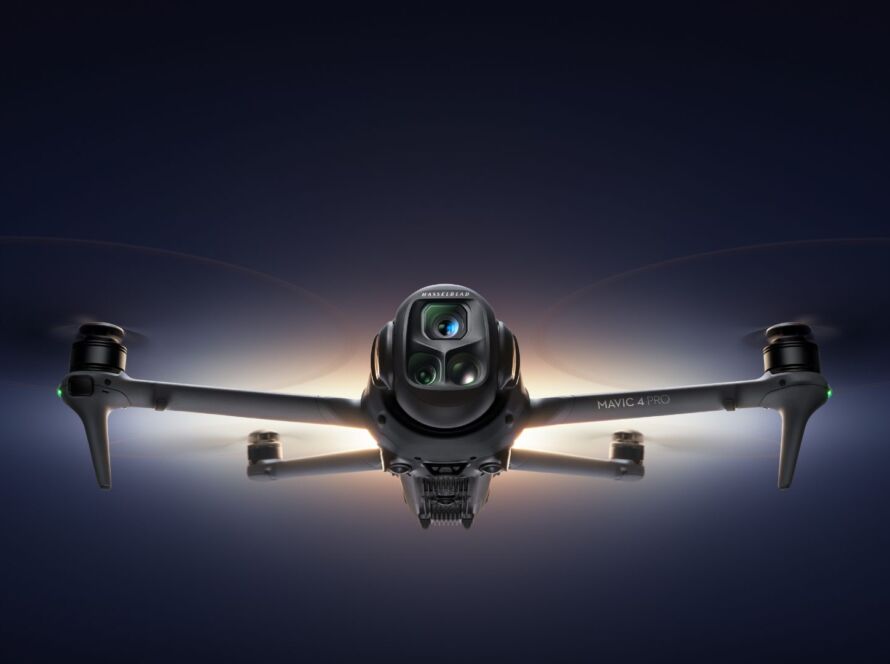
- DJI: Mavic 3 Enterprise, Mavic 3 Multispectral, Mavic 3T, Matrice 30, and Matrice 30T, all multirotor drones designed for professional applications.
- AgEagle: eBee X, eBee Geo, and eBee Ag, recognized as the world’s first commercial drones to receive C2 certification, particularly noted for their lightweight design and operational flexibility near people.
- Autel Robotics: EVO Max Series, achieving C2 certification in February 2024, enabling operations in the A2 and A3 sub-categories of the Open Category following A2CoC training.
These models highlight the growing adoption of C2 certification, with manufacturers like DJI and AgEagle leading the way in providing compliant, versatile drones for various applications.
Regulatory Context and Future Implications
EASA’s drone regulations, including the C2 classification, are part of a broader effort to improve safety and security in European airspace. From January 1, 2024, all drones operating in the EU must bear a Class Identification Label (e.g., C0, C1, C2, C3, C4), with C2 specifically addressing drones capable of operating closer to people while maintaining safety. This regulation aims to enable authorities to easily identify drones and their operators, enhancing accountability and reducing risks.
The certification also aligns with EASA’s proposed special conditions, such as SC-RPAS.C2-01 for RPAS Command and Control, indicating ongoing efforts to refine standards for drone operations. For operators, planning ahead is crucial, as certification times may vary, and regional requirements (e.g., national aviation authority guidelines) should be checked for compliance.
Comparative Analysis: C2 vs. Other Classifications
To contextualize C2 certification, it is useful to compare it with other EASA drone classes:
| Class | Max Weight | Distance from People | Pilot Requirements | Typical Use |
|---|---|---|---|---|
| C0 | <250g | No specific distance | None (basic awareness) | Leisure, toys |
| C1 | <900g | 50m from crowds | Basic training | Hobbyist, light professional |
| C2 | <4kg | 30m (5m with low speed) | A2CoC, specific training | Professional, near people |
| C3 | <25kg | 150m from residential areas | Operational authorization | Industrial, BVLOS |
| C4 | >25kg | 150m from people | Advanced authorization | Heavy commercial |
This table illustrates C2’s position as a middle-ground classification, balancing operational flexibility with safety, particularly for drones weighing less than 4 kg and requiring proximity to people.
Additional Resources and Contact Information
For further details, operators and manufacturers can refer to EASA’s official resources, such as the Easy Access Rules for drones, and national aviation authorities like the UK CAA. Manufacturer-specific guidance, such as DJI’s blog on firmware updates, provide practical insights. For queries, contacting manufacturers directly (e.g., [email protected]) or consulting EASA’s contact points can clarify regional requirements.
Conclusion
EASA C2 certification is a pivotal regulation for drone operations in the EU, enabling safer and more flexible use of drones near people while ensuring compliance with safety standards. It requires a combination of drone specifications, pilot training, and manufacturer processes, with examples like DJI and AgEagle demonstrating successful implementation. As drone usage continues to grow, understanding and adhering to C2 certification will be essential for operators to navigate the evolving regulatory landscape effectively.
Key Citations
- C2 Certification for DJI Drones hp-drones.com
- eBee X Series C2 Certification ageagle.com
- European C2 Label Application enterprise-insights.dji.com