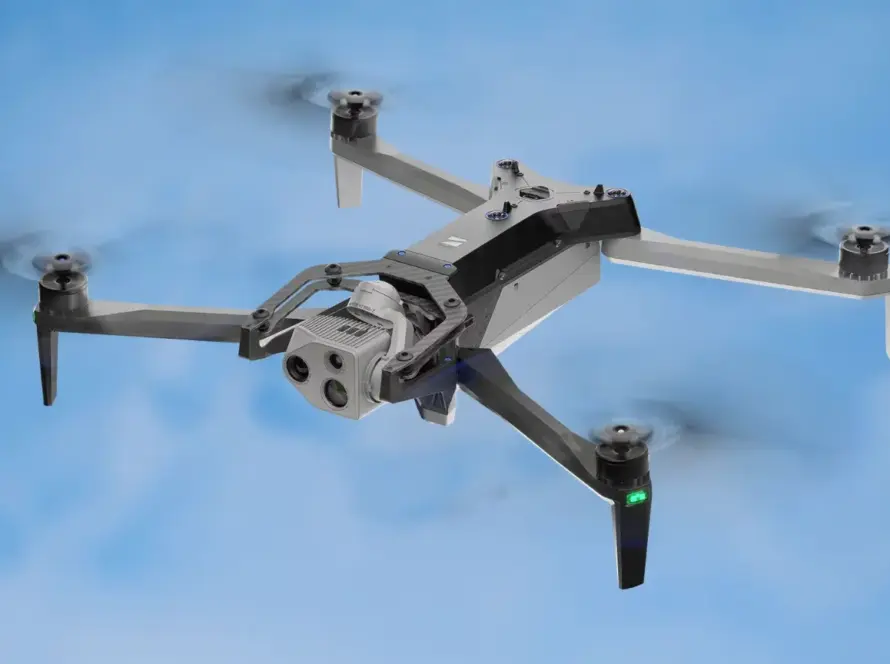
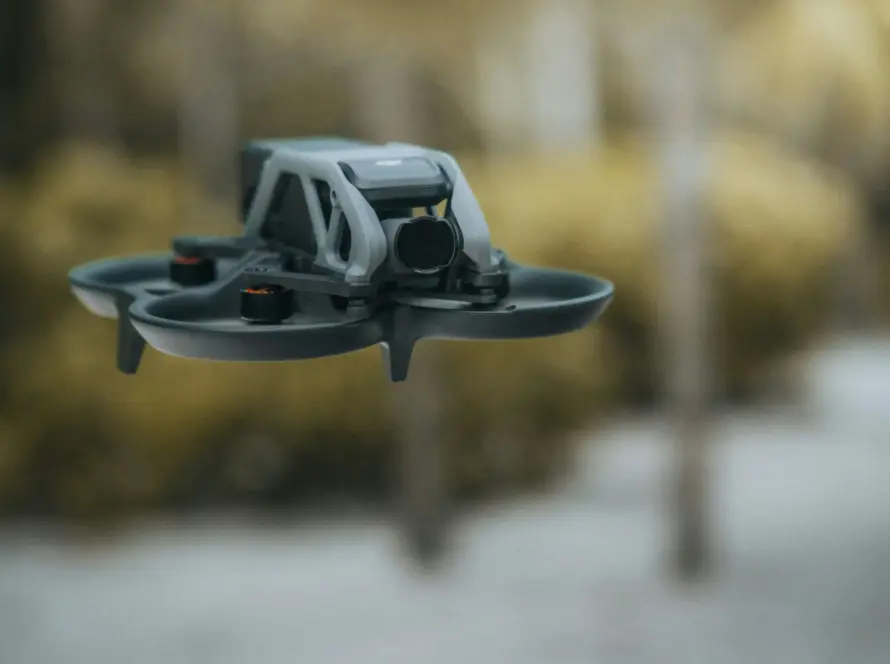
One of the most persistent bottlenecks in commercial drone operations is flight time. Standard lithium-polymer (LiPo) batteries restrict industrial drones to roughly 30 to 45 minutes of continuous flight, making large-scale mapping and linear corridor inspections highly repetitive and time-consuming. Hydrogen fuel cell drones have emerged as a disruptive alternative, breaking battery limits to offer flight endurance of three to five hours, transforming long-range industrial surveys.
Quick Summary & Direct Answer
Hydrogen fuel cell drones generate electricity by combining compressed hydrogen gas with atmospheric oxygen, emitting only clean water vapor. This technology provides energy densities up to five times greater than traditional lithium batteries, enabling commercial UAVs to fly for hours on a single tank and survey hundreds of kilometers in one flight.
The Chemical and Mechanical Engineering Behind Hydrogen UAVs
Unlike standard battery-powered drones that store electricity chemically, hydrogen drones carry a lightweight carbon-fiber composite cylinder filled with compressed hydrogen. The gas flows into a proton exchange membrane (PEM) fuel cell stack, where it reacts with oxygen to generate a continuous electrical current that powers the motors. The system operates silently and efficiently, with the only byproduct being water vapor. This clean power generator provides a flat voltage discharge rate, ensuring steady flight performance even when the hydrogen fuel levels run low, maximizing stability.
Improving Efficiency in Large-Scale Infrastructure Surveys
In massive industrial mapping projects, such as powerline grids, national borders, or cross-country pipelines, battery swaps reduce work efficiency. Drone crews must land the UAV every 40 minutes, replace batteries, and reboot the system. A hydrogen fuel cell drone can cover the same distance in a single flight. This continuous aerial coverage ensures uniform data capture, reduces transit landing risks, and reduces crew field hours, leading to significant project cost savings and much faster spatial data delivery for all B2B operators.
Performance Comparison: Hydrogen Fuel Cells vs. Lithium-Polymer Batteries
| Performance Parameter | Hydrogen Fuel Cell Power | Lithium-Polymer (LiPo) Battery |
|---|---|---|
| Continuous Flight Time | 3 to 5 hours (depends on payload weight) | 30 to 45 minutes (average industrial UAV) |
| Refueling / Recharging Time | 5 to 10 minutes (repressed gas tank swap) | 45 to 90 minutes (battery charging cycle) |
| Environmental Impact | Zero emissions (clean water vapor byproduct) | Lithium waste disposal and battery degradation over time |
Long-Range Surveying Opportunities in Jordan’s Desert Landscapes
Jordan’s open geography, featuring extensive solar energy parks in Ma’an, wind farms in Tafilah, and long water pipelines like the Disi water project, is ideal for long-range drone surveys. Loyalty Drones is leading the way by exploring the integration of hydrogen fuel cell UAVs for large infrastructure monitoring. We help energy and utility companies in Jordan monitor hundreds of kilometers of pipelines and solar layouts in a fraction of the time, delivering high-quality spatial analysis under CARC permits while minimizing environmental footprint.
Partner with Loyalty Drones
Revolutionize your industrial inspections with extended flight times. Contact the technology experts at Loyalty Drones today to discuss hydrogen drone systems.