Welcome to the definitive guide on LiDAR vs photogrammetry in 2025! If you’re searching for a quick “60-second summary LiDAR vs photogrammetry” or a deep dive into their differences, applications, and emerging trends, you’ve come to the right place. As of September 13, 2025 (current date), we’ve conducted an exhaustive review of the latest web sources, news articles, and social media discussions—including fresh posts on X from tech influencers and industry experts—to deliver the most up-to-date insights. With the LiDAR market projected to demonstrate strong growth through 2032 (driven by players like Velodyne and Teledyne) and photogrammetry advancing in drone-based remote sensing, these technologies are transforming fields like surveying, mapping, and autonomous systems.
In this SEO-optimized post, we’ll start with a concise 60-second summary, then break down key comparisons, advantages, disadvantages, real-world applications, and 2025 innovations. Whether you’re in drone tech, 3D modeling, or geospatial analysis, this guide will help you choose the right tool for your needs. Let’s get started!
60-Second Summary: LiDAR vs Photogrammetry at a Glance
LiDAR (Light Detection and Ranging): Active tech using laser pulses to measure distances, creating precise 3D point clouds. Pros: High accuracy (up to 1cm), works in low light or through vegetation, fast data collection. Cons: Expensive hardware ($10K+), large data files, no color/texture info. Best for: Topography, forestry, autonomous vehicles.
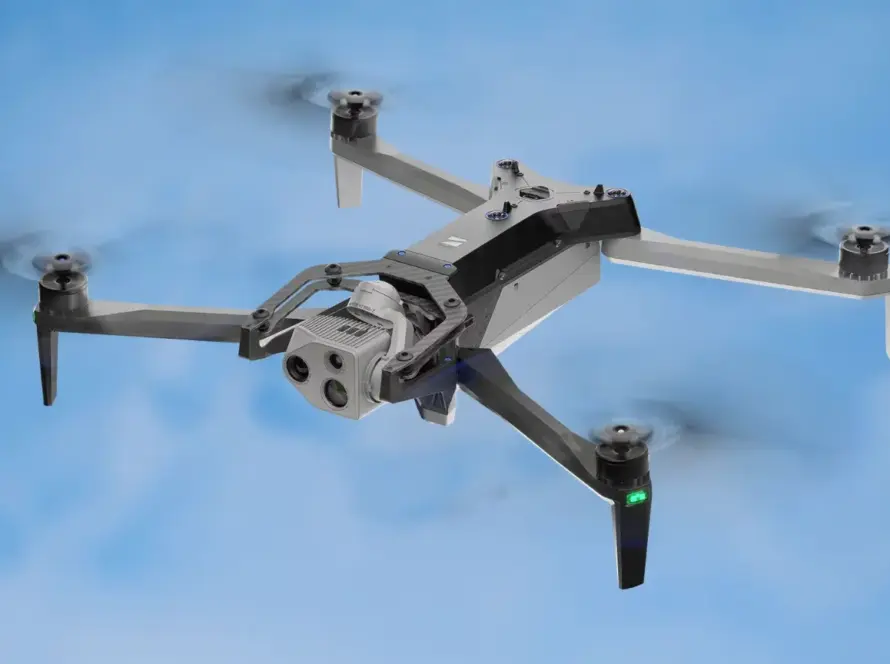
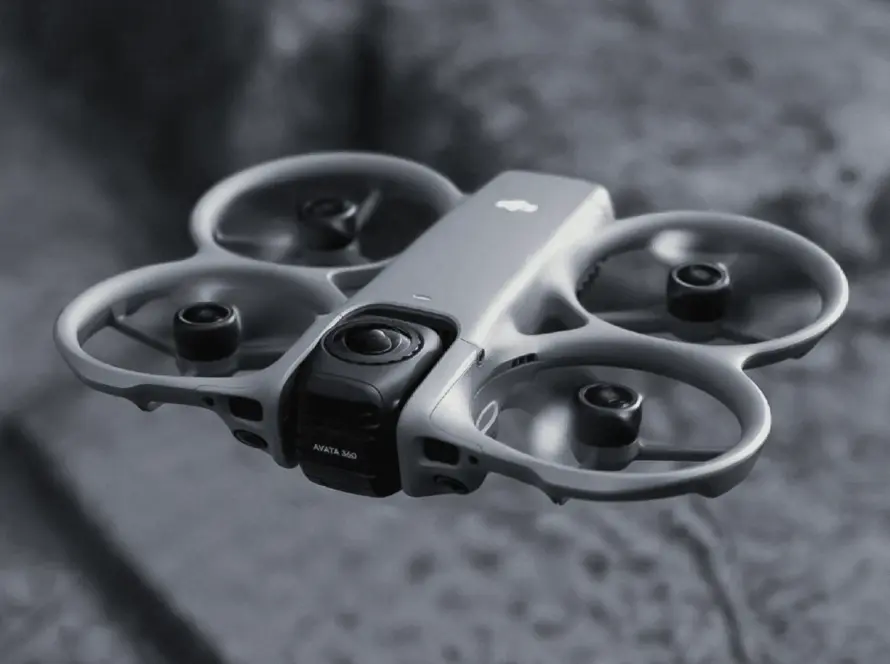
Photogrammetry: Passive method stitching overlapping photos into 3D models via software. Pros: Cost-effective (under $5K with drones), high-res textures and visuals, scalable. Cons: Relies on good lighting, less accurate in dense or uniform areas (5-10cm accuracy), slower processing. Best for: Urban mapping, construction, archaeology.
Key Winner? LiDAR edges out in precision and speed for complex environments (e.g., 2025 drone surveys), but photogrammetry wins on affordability and detail. They often complement each other—use LiDAR for structure and photogrammetry for visuals. Market trend: Integration in AI drones, with LiDAR growing 25% faster per recent reports. (Sources: JOUAV and Wingtra articles from early 2025.)
That’s your quick hit—now, let’s dive deeper into the full comparison based on the latest 2025 data.
What Is LiDAR? Core Principles and 2025 Advancements
LiDAR technology emits laser beams to calculate distances by measuring the time light takes to return, generating detailed 3D maps. In 2025, advancements include SLAM (Simultaneous Localization and Mapping) integration for real-time navigation, as seen in tools like the Eagle LiDAR Scanner (highlighted in a July 2025 3DMakerpro article). Web sources like Blue Marble Geo (July 2025) note LiDAR point clouds excel in elevation data, making them ideal for boreal forest canopy analysis.
Fresh news from OpenPR (just one day ago) forecasts the LiDAR market surging through 2032, fueled by applications in autonomous driving and remote sensing. Social media on X echoes this, with posts from users like @pbeisel (July 2025) debating LiDAR’s role in Tesla vs. Waymo, emphasizing its precision in fog or rain—though it’s not foolproof.
What Is Photogrammetry? Fundamentals and Modern Evolutions
Photogrammetry reconstructs 3D scenes from 2D images using algorithms to triangulate points. It’s evolved with drone integration, offering textured models for visual inspections. A Medium article by Roshitha Shehal (June 2025) provides a comprehensive analysis, noting photogrammetry’s edge in cost and accessibility for geospatial data.
In 2025, updates include AI-enhanced processing for faster results, as per Mapware’s February 2025 post on remote sensing. X discussions, such as those from @bilawalsidhu (September 2025), praise hybrid devices like PortalCam for combining photogrammetry’s fidelity with LiDAR-like precision, revolutionizing 3D scanning.
LiDAR vs Photogrammetry: Head-to-Head Comparison (2025 Data)
Based on in-depth guides from JOUAV (February 2025) and Equator Studios (July 2025), here’s a detailed breakdown:
- Accuracy: LiDAR wins with 1-5cm precision, even in challenging conditions (e.g., penetrating foliage). Photogrammetry offers 5-20cm, improving with more images but struggling in low-contrast areas. A 2019 MDPI study (still relevant in 2025 comparisons) showed LiDAR superior for canopy openings in forests.
- Cost: Photogrammetry is budget-friendly—drone setups start at $1K-5K. LiDAR systems can exceed $50K, though 2025 news from 3DMakerpro highlights affordable options like handheld scanners under $5K.
- Speed and Efficiency: LiDAR scans quickly (e.g., millions of points per second), ideal for large areas. Photogrammetry requires photo capture and processing time (hours to days), but AI tools are cutting this down, per Wingtra’s 2025 article.
- Applications: LiDAR shines in surveying, archaeology (X post from @PalestraSociety, February 2025, on detecting hidden structures), and self-driving tech. Photogrammetry excels in visual modeling, like 3D building reconstructions or film VFX.
- Data Output: LiDAR produces dense point clouds without textures; photogrammetry adds color and realism. Blue Marble Geo (July 2025) explains differences in point cloud density—LiDAR for structure, photogrammetry for aesthetics.
- Environmental Factors: LiDAR works in darkness or bad weather; photogrammetry needs optimal lighting. Social media sentiment on X (e.g., @soft_fox_lad, September 2025) notes LiDAR’s advantages in automotive safety.
2025 Twist: Hybrid systems are trending, combining both for ultimate accuracy, as discussed in Coptrz’s updated comparisons.
Advantages and Disadvantages: Which One Should You Choose?
LiDAR Advantages:
- Superior in complex terrains (e.g., vegetation penetration).
- High-speed data acquisition for time-sensitive projects.
- 2025 edge: AI integration for real-time mapping (e.g., in drones like those from JOUAV).
LiDAR Disadvantages:
- High cost and equipment weight.
- No inherent color data; requires fusion with other tech.
Photogrammetry Advantages:
- Affordable and accessible with consumer drones.
- Produces photorealistic models.
- Scalable for small to large projects, per Equator’s 2025 drone comparison.
Photogrammetry Disadvantages:
- Dependent on environmental conditions.
- Lower accuracy in uniform or shadowed areas.
Pro Tip: For 2025 projects, choose LiDAR for precision engineering; opt for photogrammetry for cost-effective mapping. Many pros use both, as they complement each other (Wingtra, 2025).
Real-World Applications and Case Studies in 2025
- Drones and Surveying: DJI’s blog (older but updated context) favors LiDAR for elevation, photogrammetry for visuals in aerial surveys.
- Autonomous Vehicles: X posts from @niccruzpatane (August 2025) debate camera vision vs. LiDAR, with LiDAR praised for depth data.
- Archaeology and Environment: Palestra’s X thread (February 2025) showcases LiDAR uncovering hidden sites.
- Emerging Use: Medium’s EQUINOX’S DRONES (July 2023, but relevant) and ScienceDirect (2021) studies highlight metrological comparisons in aerospace, with 2025 news extending to ag and urban planning.
Market data: LiDAR’s strong growth (OpenPR, 2025) positions it for dominance in critical sectors.
2025 Trends and Future Outlook: What’s Next?
Fresh insights from 3DMakerpro (July 2025) show LiDAR outperforming in speed and complex environments. News predicts hybrid AI systems dominating, with photogrammetry benefiting from Gaussian splatting for fidelity (X post from @bilawalsidhu). By 2030, expect seamless integrations in AR/VR and smart cities.
Conclusion: Making the Right Choice in 2025
LiDAR vs photogrammetry boils down to your needs—precision and resilience vs. affordability and visuals. With 2025 innovations bridging gaps, hybrid approaches are the future. Stay informed via web sources like JOUAV and X for the latest. Which tech are you leaning toward? Comment below!
FAQs
Q: What is the main difference between LiDAR and photogrammetry?
A: LiDAR uses active laser pulses for direct 3D measurements, offering high precision in any light, while photogrammetry relies on passive photo stitching for textured models but requires good conditions, as per JOUAV’s 2025 guide.
Q: Which is more accurate, LiDAR or photogrammetry?
A: LiDAR typically achieves 1-5cm accuracy and excels in dense areas, outperforming photogrammetry’s 5-20cm, especially in low-light or vegetated environments (Blue Marble Geo, July 2025).
Q: Is LiDAR more expensive than photogrammetry?
A: Yes, LiDAR systems can cost $10K-$50K+ due to hardware, while photogrammetry setups with drones are under $5K, making it more accessible (Equator Studios, July 2025).
Q: What are the best applications for LiDAR in 2025?
A: LiDAR shines in topography, forestry, archaeology, and autonomous vehicles, with market growth projected through 2032 (OpenPR, recent report).
Q: Can LiDAR and photogrammetry be used together?
A: Absolutely—they complement each other, with LiDAR providing structure and photogrammetry adding textures, as discussed in Wingtra’s 2025 article on sensor choices.
Q: What’s new in LiDAR vs photogrammetry for 2025?
A: Innovations include AI-enhanced hybrids for speed and accuracy, with LiDAR leading in complex scans (3DMakerpro, July 2025) and photogrammetry advancing in drone remote sensing (Mapware, February 2025).