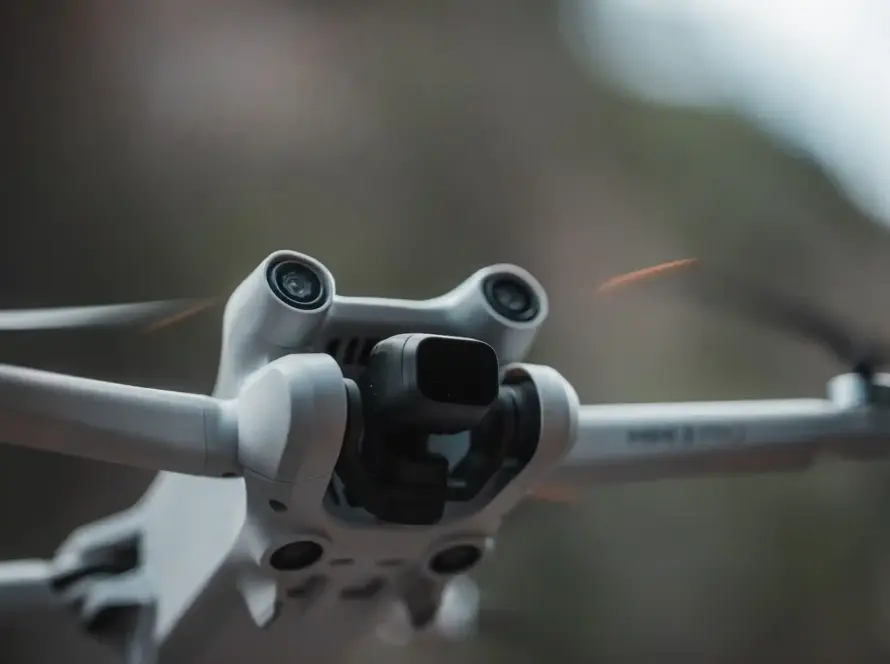
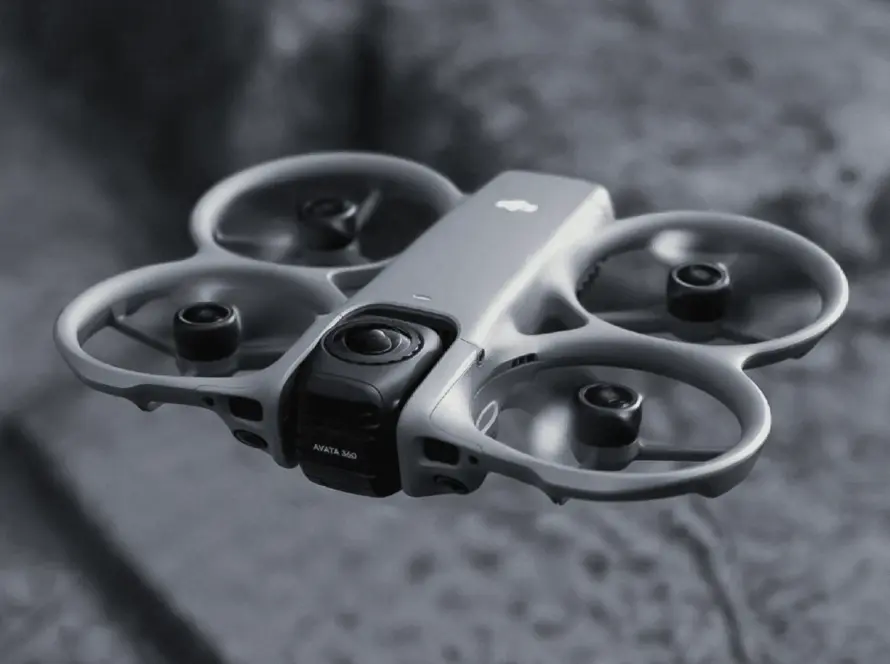
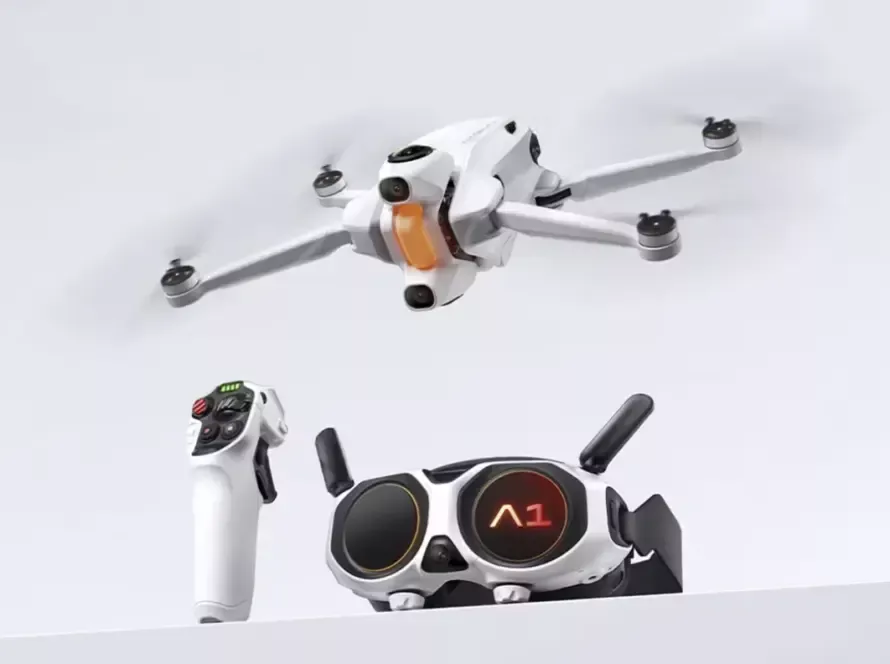
For years, DJI has been synonymous with consumer and professional drones, dominating the aerial imaging market with an estimated 70-80% market share. But 2025 has marked a dramatic shift in the company’s trajectory. No longer content with aerial supremacy, DJI has launched strategic offensives into entirely new industries, from e-bike propulsion systems to smart home robotics, signaling one of the most significant corporate transformations in the tech world today.
The company’s rapid diversification into electric bike motors with the Avinox System and home cleaning with the Romo robot vacuum series represents a fundamental strategic shift. DJI appears to be following the playbook of multi-category tech giants like Sony and Xiaomi, building an interconnected ecosystem of devices that share technology, software, and brand identity across seemingly disparate product categories.
This comprehensive analysis examines DJI’s expansion strategy, product roadmap, and how the company is leveraging its core technologies to conquer new markets in 2025 and beyond.
DJI’s 2025 Product Roadmap: Drones and Cameras Continue Evolving
Despite venturing into new categories, DJI continues to advance its core imaging and drone technologies with an ambitious 2025 product lineup that demonstrates impressive innovation pace across multiple price segments and use cases.
Recently Launched Products
According to industry leaks and official announcements, DJI has already launched several significant products in early 2025:
-
DJI Matrice 400: Released June 10, 2025, this enterprise drone boasts a 59-minute flight time, 6 kg payload capacity, and advanced obstacle sensing with LiDAR and mmWave radar for professional applications like emergency response and mapping .
-
DJI Flip: Launched January 14, 2025, this sub-249g mini-drone features foldable propeller guards, 4K/60fps video capability, and 31-minute flight time. Designed for vloggers and beginners, it represents DJI’s push into the accessible drone market .
-
DJI Osmo 360: This 360-degree action camera (launched July 31, 2025) features 8K video capability, a 1-inch sensor, and up to 180 minutes of battery life with an optional extension bar. It positions DJI against established players like Insta360 and GoPro in the immersive video space .
imminent Releases and Strong Rumors
The product pipeline remains strong through 2025, with several highly anticipated releases:
-
DJI Mini 5 Pro: Expected August-September 2025, this sub-250g drone may feature a 1-inch sensor (a first for the Mini series), LiDAR obstacle avoidance, and up to 50 minutes of flight time. Its regulatory-friendly weight makes it particularly significant for recreational flyers .
-
DJI Action 6: Following the Action 5 Pro, this model is expected to feature enhanced video capabilities, potentially including 8K recording and improved low-light performance, continuing DJI’s competition with GoPro in the action camera segment .
Table: DJI’s Expected 2025 Product Launches
| Product Name | Category | Expected Release | Key Features |
|---|---|---|---|
| Mini 5 Pro | Consumer Drone | Aug-Sept 2025 | 1-inch sensor, LiDAR, 50min flight time |
| Action 6 | Action Camera | Late 2025 | 8K video, improved stabilization |
| Osmo Nano | Compact Camera | Late 2025 | Modular design, 4K/60fps |
| Avata 3 | FPV Drone | Late 2025 | Improved stability, longer flight time |
| Pocket 4 | Handheld Gimbal | Unknown | Dual camera system |
The Avinox Drive System: DJI’s Unexpected Entry Into E-Bikes
One of DJI’s most surprising diversifications has been its entry into the e-bike motor market with the Avinox drive system. First unveiled at Eurobike 2024, this system represents a serious challenge to established players like Bosch, Shimano, and Brose.
Technical Specifications and Capabilities
The Avinox system boasts impressive technical credentials:
-
120 Nm of torque and 1,000 watts peak power output
-
Total system weight of just 2.52 kg (making it one of the lightest in its class)
-
Integrated 800 Wh battery (with optional 600 Wh version)
-
High-resolution 2-inch OLED touchscreen integrated into the top tube
-
Compatibility with third-party batteries
These specifications position the Avinox at the premium end of the e-bike motor market, particularly suited for high-performance e-MTBs where weight, power, and integration are critical factors.
Brand Adoption: The “DJI Dozen”
Despite being a relative newcomer, DJI has secured partnerships with at least 12 major bike brands adopting the Avinox system, spanning from urban commuters to premium enduro machines:
-
Amflow – PL Carbon Pro trail e-bike
-
Commençal – Meta Power SX DJI enduro e-bike
-
Crestline – RS 181 Spectre limited edition
-
Crussis – E-Full 12 trail e-bike
-
Forbidden – Druid Core and Lite e-MTBs
-
Megamo – Reason CRB trail bike
-
Orange – Phase Evo e-MTB
-
Rotwild – R.EX Ultra all-mountain bike
-
Steppenwolf – Tundra 11.0 enduro sled
-
Teewing – Turbo Force trail e-bike
-
Unno – Mith Pro high-performance e-MTB
-
Velduro – Rogue enduro bike
This rapid adoption speaks to the system’s technical merits and DJI’s ability to leverage its reputation for innovation and reliability into new markets.
Market Impact and Reception
The Avinox system has received significant industry recognition, including the Design & Innovation Award, and topped professional reviews in group tests. Reviewers particularly praised its climbing performance and power delivery, though some noted that bikes using the system needed suspension tuning to match its capabilities on descents .
The system represents DJI’s first major foray into consumer transportation, leveraging its expertise in battery technology, motor control systems, and user interfaces developed through its drone business.
DJI Romo Series: Revolutionizing Home Cleaning with Drone Technology
In perhaps its most unexpected diversification, DJI entered the robot vacuum market in July 2025 with the Romo series, applying its obstacle avoidance and navigation technologies to home cleaning.
Technical Innovation from Drones to Vacuums
The Romo series represents a classic case of technology cross-pollination, adapting DJI’s sophisticated drone navigation systems for home use:
-
Omnidirectional obstacle sensing using binocular fisheye vision sensors and three wide-angle laser sensors
-
Machine learning perception algorithms that can detect objects as small as 2mm
-
25,000 Pa suction power – the highest officially recorded in the robot vacuum market
-
Anti-tangle double roller brush and extendable side brushes
-
Dual spinning mop pads that lift when crossing carpets
These features directly translate DJI’s expertise in drone obstacle avoidance and navigation algorithms to the challenges of home cleaning, potentially offering a significant advantage over existing competitors.
Product Variants and Pricing
The Romo series launches with three models:
-
Romo S (entry-level with opaque white housing)
-
Romo A (mid-range with transparent panel)
-
Romo P (flagship with fully transparent design and additional cleaning solution tanks)
Priced at approximately $654 USD for Romo S and A, and $947 USD for Romo P in the Chinese market, the series positions itself in the premium segment of the robot vacuum market .
Market Context and Global Availability
DJI enters a growing but competitive market. According to market data, global shipments of smart home cleaning robots are projected to reach 32.1 million units in 2025, representing a 28.2% year-on-year increase .
The Romo series initially launched in China, with a global rollout expected later in 2025. However, U.S. availability remains uncertain due to potential import restrictions linked to the proposed “U.S. Countering CCP Drones Act,” which could block certain DJI products unless they receive security clearance .
Table: DJI Romo Series Specification Comparison
| Feature | Romo S | Romo A | Romo P |
|---|---|---|---|
| Suction Power | 25,000 Pa | 25,000 Pa | 25,000 Pa |
| Design | Opaque white | Transparent top | Fully transparent |
| Object Detection | Yes | Yes | Yes |
| Mopping System | Basic | Advanced | Premium with solution tanks |
| Price (approx.) | $654 | $654 | $947 |
Strategic Analysis: The DJI Ecosystem Play
DJI’s simultaneous expansion into multiple new categories reveals a sophisticated corporate strategy that merits examination through several lenses.
Technology Transfer Patterns
DJI’s diversifications demonstrate consistent patterns of technology transfer from its core drone business:
-
Obstacle avoidance systems from drones to robot vacuums
-
Battery and power management from drones to e-bike systems
-
Stabilization systems from gimbals to action cameras
-
Video transmission technologies across imaging products
This approach allows DJI to leverage its R&D investments across multiple product lines, potentially accelerating development while reducing costs.
Ecosystem Lock-in Strategy
Similar to Apple’s approach, DJI appears to be building an interconnected ecosystem of devices that work seamlessly together:
-
OcuSync 4 technology creating compatibility across drones and controllers
-
DJI Mic integration across cameras and action devices
-
Shared batteries and accessories where possible
-
Unified software experience across products
This ecosystem approach creates switching costs for customers and builds brand loyalty across multiple product categories.
Market Positioning Approach
DJI’s entry into new markets follows a consistent pattern:
-
Enter with premium, technologically advanced products
-
Leverage existing brand reputation for innovation and quality
-
Price competitively within the premium segment
-
Target early adopters and professionals first before expanding to mass market
Challenges and Potential Headwinds
Despite DJI’s impressive expansion, the company faces significant challenges:
-
Geopolitical pressures: Potential U.S. import restrictions could limit market access
-
Increased competition: Established players in each market are unlikely to cede share easily
-
Brand dilution: Rapid expansion into diverse categories could blur DJI’s brand identity
-
Supply chain complexity: Managing production across vastly different product categories
-
Different distribution channels: E-bikes and vacuums require different sales approaches than drones
Conclusion: DJI’s Transformative Year
2025 represents a watershed moment for DJI, transforming from a drone specialist into a multi-category technology leader. The company’s strategic expansions into e-bike motors and home cleaning demonstrate ambitious vision and an efficient approach to leveraging core technologies across new domains.
While drones and imaging products continue to evolve at an impressive pace, the Avinox and Romo products reveal DJI’s ambition to become a broader technology ecosystem player rather than a single-category brand.
The coming years will test whether DJI can maintain its innovation pace across these diverse categories while navigating geopolitical and market challenges. But if early product reception and technical execution are indicators, DJI’s diversification strategy appears thoughtfully conceived and well-executed.
For consumers, DJI’s expansion means more choices with potentially superior technology across multiple categories. For the industries involved, it means welcoming a formidable new competitor that has repeatedly demonstrated its ability to redefine product categories through technological innovation.
FAQs
What is DJI’s Avinox system?
The Avinox system is DJI’s first e-bike drive unit, featuring 120 Nm of torque, 1,000 watts peak power, and weighing just 2.52 kg. It includes an integrated battery and display, and is being used by at least 12 major bike brands across various e-bike categories .
When did DJI enter the robot vacuum market?
DJI entered the robot vacuum market in July 2025 with the Romo series, which includes three models: Romo S, Romo A, and Romo P. These vacuums feature DJI’s drone-derived obstacle avoidance technology and suction power of up to 25,000 Pa .
What are DJI’s main new products for 2025?
DJI’s 2025 product lineup includes the Matrice 400 enterprise drone, Flip mini drone, Osmo 360 action camera, Mini 5 Pro drone (expected Aug-Sept 2025), and the Action 6 camera, alongside their expansions into e-bike motors and robot vacuums .
How is DJI expanding beyond drones?
DJI is expanding beyond drones through strategic diversification into new product categories, including e-bike propulsion systems (Avinox), robot vacuums (Romo series), and action cameras (Osmo and Action series), leveraging their core technologies across these domains .
What is DJI’s ecosystem strategy?
DJI’s ecosystem strategy involves creating interconnected products that share technologies (like OcuSync transmission), compatible accessories (such as mics and controllers), and unified software experiences to build a comprehensive tech ecosystem that encourages brand loyalty across multiple product categories .